Showing posts with label self defense. Show all posts

Friday, March 13, 2026

What is a Just War?

The concept of just war has deep roots in Christian theology, particularly within Catholicism, and has influenced Protestant thought as well. It provides a moral framework for when the use of lethal force by a state can be ethically permissible. However, in contemporary political discourse, especially among some right-wing, politically inclined Catholics and Protestants, the doctrine is often misunderstood or misapplied. 

Many equate any military action aimed at regime change, preemptive strikes against disliked leaders, or responses to perceived slights or delays as inherently "just." This distorts the tradition's emphasis on self-preservation and legitimate defense, turning it into a justification for offensive or ideological wars.

This blog post explores the historical and doctrinal foundations of just war theory, its strict criteria, why it is fundamentally about defense rather than aggression, and why some conservative Christians misinterpret it to support broader interventions.


 Historical Development of Just War Theory

Just war theory originated in Christian thought to reconcile the Gospel's call to peace with the reality of evil and the need to protect the innocent. St. Augustine of Hippo (354–430 AD) laid early foundations, arguing that war could be waged out of love to restrain evil and restore peace, not for conquest or hatred. He drew from Cicero and Scripture, emphasizing that wars must correct grave wrongs.

St. Thomas Aquinas (1225–1274) systematized it in his Summa Theologiae (II-II, q. 40). He outlined three key requirements for a war to be just (jus ad bellum, or right to war):


1. Legitimate authority — Declared by a sovereign, not private individuals.

2. Just cause — Typically defense against aggression or rectification of serious injustice.

3. Right intention — Aimed at peace and good, not vengeance, domination, or cruelty.


Later developments added criteria for conducting war justly (jus in bello), such as proportionality and discrimination (protecting non-combatants).

The modern Catholic articulation appears in the Catechism of the Catholic Church (CCC), paragraphs 2307–2317. It stresses that "all citizens and all governments are obliged to work for the avoidance of war" (CCC 2308). War is a last resort for legitimate defense.


The strict conditions for legitimate defense by military force (CCC 2309) are:


- The damage inflicted by the aggressor on the nation or community of nations must be lasting, grave, and certain.

- All other means of putting an end to it must have been shown to be impractical or ineffective.

- There must be serious prospects of success.

- The use of arms must not produce evils and disorders graver than the evil to be eliminated. Modern weapons' destructive power weighs heavily here.


These are cumulative; all must be met simultaneously. The doctrine prioritizes peace and views war as a tragic necessity for self-defense, not a tool for nation-building, ideological purification, or punishing "bad" regimes.

Protestant traditions largely adopt similar principles, modified from Catholic sources. Thinkers like Martin Luther and John Calvin acknowledged the magistrate's role in wielding the sword for justice (Romans 13), while emphasizing restraint. Many Protestant denominations affirm just war thinking, though some lean toward pacifism or "just peacemaking."


 Just War as Self-Preservation, Not Aggression

At its core, just war is defensive. It permits force only when a nation or community faces imminent, grave harm that cannot be averted otherwise. It is not about:


- Regime change for ideological reasons (e.g., spreading democracy or removing dictators disliked for human rights abuses alone).

- Preemptive attacks based on potential future threats without "lasting, grave, and certain" aggression.

- Punishing delays in responses, diplomatic slights, or harboring suspicions.

- Economic interests, resource control, or geopolitical dominance disguised as justice.


The aggressor must have already inflicted or imminently threatened severe, irreversible harm. Examples include repelling an invasion or stopping genocide in progress when diplomacy fails. Preventive wars or interventions to "fix" another country's government fail the "last resort" and "grave and certain" tests, as they often rely on speculation rather than actual aggression.

Modern weapons amplify the final condition: proportionality weighs heavily against escalation, as nuclear, chemical, or widespread conventional warfare can create greater evils (e.g., regional instability, mass displacement, or terrorism surges).


Misunderstandings Among Some Right-Wing Catholics and Protestants

Some politically conservative Christians, influenced by nationalism, anti-communism, or hawkish foreign policy, stretch just war criteria to endorse offensive actions. They may view military power as a moral imperative to confront "evil" regimes globally, conflating prudential judgments with absolute moral imperatives.

This manifests in support for interventions like the 2003 Iraq War, where claims of weapons of mass destruction (later disproven), links to terrorism, or Saddam Hussein's tyranny were invoked as "just cause." Critics, including Pope John Paul II, argued it failed just war thresholds: no imminent grave threat from Iraq post-1991, viable alternatives (inspections), uncertain success, and foreseeable graver evils (sectarian violence, ISIS rise, Christian exodus from the Middle East).

Similar patterns appear in debates over Iran, where regime hostility, proxy actions, or nuclear ambitions prompt calls for strikes framed as "defensive." Yet without direct, lasting aggression against the U.S. or allies, these risk failing the criteria.


Why this misunderstanding?

1. Politicization: In polarized environments, just war becomes a rhetorical tool. Conservative media or figures may label opponents "pacifists" or "weak," pressuring alignment with hawkish policies. This inverts the doctrine's peace priority.


2. Confusion of prudential and moral judgments: The CCC notes evaluating conditions belongs to leaders' prudential judgment for the common good. Some treat disagreement as moral failure rather than legitimate debate.


3. Nationalism over universalism: Viewing one's nation as uniquely moral leads to seeing any threat (real or perceived) as justifying force, ignoring global proportionality.


4. Selective application: Criteria are applied rigorously to enemies but loosely to allies or one's own side.


Examples include regret over Iraq support among some Catholics, who later recognized it produced worse evils, or ongoing debates where strikes are justified preemptively without meeting "certain" harm.


 Conclusion: Reclaiming Authentic Just War Teaching

Just war theory is not a blank check for military action but a stringent moral guardrail emphasizing peace, defense, and restraint. It protects against vengeance, imperialism, or ideological crusades. Christians—Catholic and Protestant—must apply it rigorously, prioritizing non-violence and diplomacy.

Misapplying it to support regime-change wars or attacks over disliked leaders betrays its spirit. True adherence requires humility, recognizing war's tragedy and the heavy burden on leaders.

By returning to sources like Aquinas, the Catechism, and Augustine, believers can resist distortions and witness Christ's peace in a conflicted world.


Sources:

- Catechism of the Catholic Church, paragraphs 2307–2317 (Vatican.va).

- St. Thomas Aquinas, Summa Theologiae, II-II, q. 40.

- Catholic Answers: "What Is a 'Just War'?" (catholic.com).

- Word on Fire: "That Evil Will Not Prevail: A Primer on Catholic Just War Doctrine."

- America Magazine articles on just war applications (e.g., Iraq and recent conflicts).

- Various analyses from Catholic Standard, National Catholic Register, and others critiquing misapplications in modern interventions.

Tuesday, December 10, 2024

Daniel Penny Jury Got It Wrong: Evidence Shows Guilt

Examining the Case: Arguments for Daniel Penny's Guilt in the Death of Jordan Neely

The trial of Daniel Penny, a former Marine charged with manslaughter and criminally negligent homicide in the death of Jordan Neely, has been a focal point of public attention and legal scrutiny. While Penny was ultimately found not guilty on December 9, 2024, it's important to examine the arguments and evidence that were presented by the prosecution to understand the complexities of the case and the reasons why some believe Penny should have been held accountable.

Background of the Case

On May 1, 2023, Jordan Neely, a 30-year-old homeless man, was killed after being placed in a chokehold by Daniel Penny on a New York City subway. Neely, known for his Michael Jackson impersonations, had a history of mental illness and erratic behavior. On the day of the incident, witnesses described Neely as acting aggressively and making threatening statements. Penny, a 26-year-old Marine veteran, intervened and restrained Neely in a chokehold for nearly six minutes, leading to Neely's death.

Prosecution's Arguments

The prosecution argued that Penny's actions were reckless and excessive, leading to Neely's death. Here are the key points presented by the prosecution:

1. Excessive Force: The prosecution contended that Penny used excessive force by maintaining the chokehold for an extended period, even after Neely had ceased to be a threat. They argued that Penny could have restrained Neely without causing his death. The city's medical examiner declared the chokehold to be the cause of Neely's death.

2. Lack of Immediate Threat: Prosecutors highlighted that Neely was not armed and did not pose an immediate threat to Penny or other passengers once he was subdued. They argued that Penny's continued use of the chokehold was unnecessary and demonstrated a disregard for Neely's life.

3. Medical Evidence: The prosecution presented medical evidence showing that Neely died from compression of the neck, which was consistent with the chokehold applied by Penny. This evidence was crucial in establishing the cause of death and linking it directly to Penny's actions.

4. Witness Testimonies: Several witnesses testified that Neely was subdued and no longer resisting when Penny continued to hold him in the chokehold. These testimonies supported the prosecution's argument that Penny's actions were excessive and unjustified.

Legal Standards and Charges

To convict Penny of criminally negligent homicide, the prosecution needed to prove that Penny caused Neely's death with criminal negligence and that his actions were not justified. Criminal negligence involves a failure to perceive a substantial and unjustifiable risk that constitutes a gross deviation from the standard of care that a reasonable person would observe in the situation.

Broader Implications

The case of Daniel Penny and Jordan Neely has raised significant questions about public safety, mental health, and the use of force. The trial highlighted the challenges faced by individuals with mental illness and the need for better support systems. It also underscored the importance of appropriate responses to perceived threats and the potential consequences of excessive force.

The case has divided Americans with some believing Daniel Penny is a hero and others saying Jordan Neely did not deserve to be killed. Those who argue that Penny is a hero are mostly from the right-wing conservative faction in American politics. They view Penny's action as self-defense and claim Neely was violent and a threat to people in New York City and deserved what he got. Those who support Neely say that he was homeless and simply asking for food and water. He had mental illness and often had outbursts due to a lack of medication and overall treatment. The city failed to help him. They claim he is also a victim.  

We are now in a situation where people are bringing in politics and race. On social media, we are already seeing people (mostly non-Hispanic white right-wingers) attack blacks claiming they are the cause of violence, and focus on Neely's criminal record assassinating his character to deflect from his mental illness, homelessness situation, and lack of help from the city of New York.  They even go to the irrational extreme of claiming drugs killed Neely or Floyd when they were walking about without issue until they met their deaths at the arms and knees of white men.  We also see people attack Daniel Penny because he is Caucasian calling his chokehold move on Neely a "lynching."  Threats are being made to do to him what he did to Neely.  Sadly, it has come to this. The racism is in fact clear as day.  We are seeing a white vs back narrative subliminally presented in the arguments on both sides. People are forgetting the facts of the story.  

  • Did Neely deserve to be chokehold to death? 
  • Did Daniel Penny and others do the right thing and did they act in self-defense?

Based on what we know, the answer to these are not so easy, but the law can help.  In New York and 14 other states, there is a duty to retreat clause. This means that citizens have a duty to escape or get away from a violent situation if the opportunity is there. If there is no option to retreat, then citizens can use force, even kill the assailant.  

The duty to retreat does not apply to citizens when they are at home in New York at home, place of work, and at the car in other states.  The law varies from state to state. This is why people need to educate themselves.  Many times people, particularly conservatives, think that it is okay to kill someone who attacks you. They claim it is a "right" to self-defense. This is not true. 

One cannot just kill an attacker and claim self-defense.  Since this case between Neely and Penny happened in New York City, we will focus on the law in New York State. You can read more about laws in other states here (https://reason.com/volokh/2020/12/21/duty-to-retreat-35-states-vs-stand-your-ground-15-states/).


In New York state, Article 35 of the penal code states:

  (c) The physical  force  involved  is  the  product  of  a  combat  by

agreement not specifically authorized by law.

  2.  A  person  may  not  use deadly physical force upon another person

under circumstances specified in subdivision one unless:

  (a) The actor reasonably believes that such other person is  using  or

about  to  use  deadly  physical  force. Even in such case, however, the

actor may not use deadly physical force if he or  she  knows  that  with

complete  personal safety, to oneself and others he or she may avoid the

necessity of so doing by retreating; except that the actor is  under  no

duty to retreat if he or she is:

  (i) in his or her dwelling and not the initial aggressor; or

  (ii) a police officer or peace officer or a person assisting a police

officer or a peace officer at the latter`s direction, acting pursuant to

section 35.30; or

  (b) He or she reasonably believes that such other person is committing

or attempting to commit a kidnapping, forcible rape,  forcible  criminal

sexual act or robbery; or

  (c) He or she reasonably believes that such other person is committing

or  attempting to commit a burglary, and the circumstances are such that

the use of deadly physical force is authorized by subdivision three of

section 35.20.


https://ypdcrime.com/penal.law/article35.php   


So, as you read, there is a duty to retreat in New York State.  Daniel and the others had to retreat and not engage Neely unless there was no option to retreat. In light of this, Daniel Penny and the riders involved need to be charged for killing Jordan Neely. He broke the law (duty to retreat clause) of NY state. Screaming out for food, and water, or even throwing garbage does not warrant being choked to death.  Nor does having a criminal record.  Citizens cannot take the law into their own hands. This is not self-defense. Daniel and others had a duty to retreat.

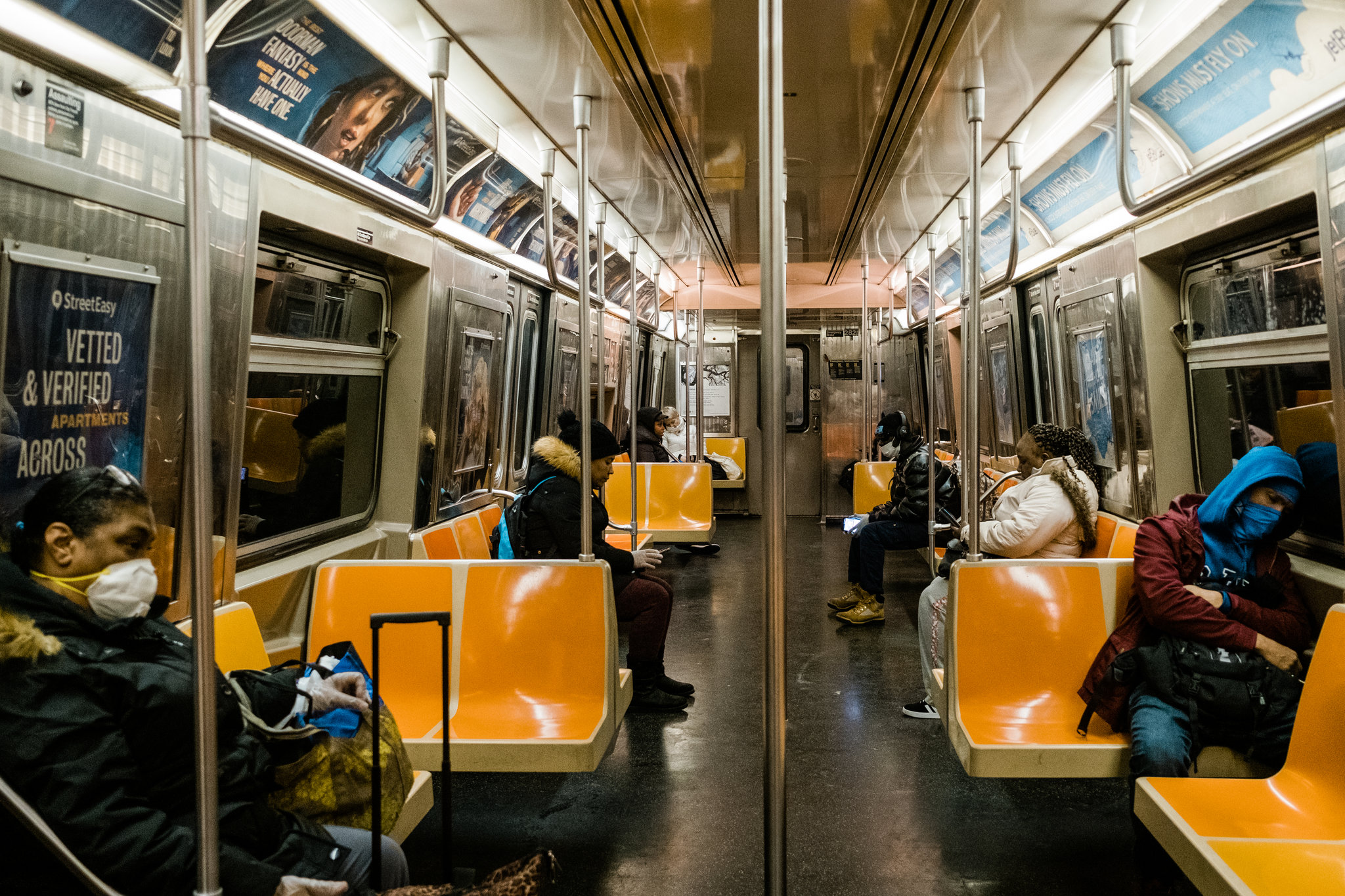
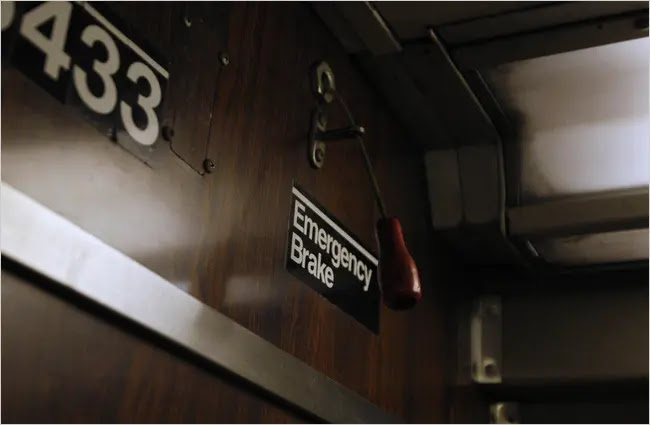
Subway cars have end doors where people can move between cars.  They have emergency brakes that stop a moving train, allowing for exiting.  Attached are photos.  Moreover, cars have emergency windows that can be removed to exit.  There is no excuse.  The MTA offers guidelines here mentioning the emergency windows and how to exit a subway car, see: http://new.mta.info/document/76901.  If not charged, this will empower people to kill others for any outburst, whether mental illness-related or not. Even autistic people will be in danger depending on where on the spectrum they are and if this causes them to behave violently. People will kill others just for being bumped on a train, bus, or sidewalk.  We cannot have this in a civilized society where the rule of law supersedes.  Jordan Neely had a mental illness and was not helped. He could not help how he behaved due to it.  He did not deserve to be killed.  Attacking his character does nothing but turn the attacker into a despicable human being lacking morals and compassion.  Justice must be served.  The rule of law must matter.

In 2017, I served on a trial where a young man killed an elderly man with a metal pipe in the South Bronx (see: https://bronx.news12.com/jason-rivera-charged-in-death-of-80-year-old-manuel-rosario-at--york-grill-deli-34829640). In the video, we saw both men arguing. The young man walks out of the store and the elderly man goes to the back of the bodega and grabs a pipe going after the young man.  We see another cell video of both arguing outside and the young man hitting the elderly man with a pipe.  Many of the jurors thought the younger guy was defending himself. However, I brought up the duty to retreat clause and before deliberation, the judge told us the law.  

I remember this when studying paralegal in high school.  We did internships at the Bronx Court House on the Grand Concourse and 161st.  Like conservatives on social media, the jury I was with assumed the young guy was legitimately defending himself. However, this was not the case.  He had a duty to retreat. The elderly man was really no threat. He easily took the pipe away from him.  Therefore, the young man could have left with the pipe, tossed it aside and left, or simply just called 911 while holding the pipe and not engaging the elderly man. Instead, he took the pipe away and began to beat the elderly man fracturing his cheekbone and skull overall.  A few of the jurors got upset with me because I took the case seriously. They just wanted to issue a verdict and go back to their jobs. They were worried about not getting a paycheck. I was more concerned about justice. 
Two young Dominican guys were even making snarky remarks causing the older jurors to shake their heads in disbelief and call them out for their immaturity.  Anyhow, my delay in the deliberation worked and the right decision was made that even the judge, district attorney, and court officers applauded us. 

The other jurors pointed me out as the reason for delaying deliberations.   We ended up deciding a guilty verdict for manslaughter against the young man. He may have thought he was defending himself because the elderly man went after him with a pipe, but that was not self-defense.  He had a duty to retreat.  Similarly, Neely was not truly a threat. Screaming and crying out for food is not a threat.  It is a disturbance of the peace.  


Conclusion

While Daniel Penny was ultimately found not guilty, the arguments and evidence presented by the prosecution provide a compelling case for why some believe he should have been held accountable for Jordan Neely's death.  In my opinion, based on my juror experience, my legal studies and other cases, Daniel Penny is guilty.  Some are making the argument that Neely was threatening and that threats can result in the loss of your life under self-defense, but let us examine the law in NY.

In New York, the law surrounding self-defense is quite specific. Under New York Penal Law, you are allowed to use physical force to defend yourself or others if you reasonably believe it is necessary to prevent imminent harm. However, the use of deadly physical force is only justified under certain conditions.

Key Points of New York Self-Defense Law:

1. Reasonable Belief: You must have a reasonable belief that you or someone else is in imminent danger of being killed or seriously injured. This means that the threat must be immediate and not just a verbal threat without any accompanying physical aggression.

2. Imminent Threat: The threat must be imminent, meaning it is about to happen. If someone makes a threat but does not take any immediate action to carry it out, using deadly force may not be justified.

3. Proportional Force: The force used in self-defense must be proportional to the threat faced. Deadly force can only be used if there is a serious threat of death or serious physical injury.

4. Duty to Retreat: New York follows the "duty to retreat" principle, which means that if you can safely avoid the threat by retreating, you are required to do so before using deadly force. However, this duty does not apply if you are in your own home.

In summary, while you can use physical force to defend yourself if you believe you are in immediate danger, using deadly force is only justified if the threat is imminent and serious, and if you cannot safely retreat. It's always best to consult with a legal professional to understand the specifics of your situation. So as you can read, it is not black and white. One cannot say every threat is "imminent and serious" and one cannot immediately react physically. The situation must analyzed carefully. 

This is why this trial was not decided properly under the law. There was no justification for Daniel Penny killing Jordan Neely.  The jury simply did not take the case seriously or was coerced by social media to other parties.  The verdict simply does not make sense and invalidates NY State law. Because of this decision, it is open season now against the homeless, people with mental illness, or other disabilities which makes them prone to outbursts and emotional and mental episodes. 

I feel like going to the Bronx Criminal Court to talk to the judge in the case where I served as a juror in 2017. We decided on a guilty verdict for a young Hispanic man in his mid-20s who killed an older man after the older man confronted him with a metal pipe. After the Daniel Penny verdict, this young man should be freed. It is only fair. Unless there is one set of rules for non-Hispanic whites and another for African Americans and Hispanic Americans. 


The Abel Cedeno case needs a relook as well. He was 18 years old when he fought off two younger African American classmates who had bullied him for years or months. His mom complained but school officials did nothing. Abel complained, and the school ignored him. So one day, he brought a blade/knife to school. 

The bullies harassed him and assaulted him with paper balls, spitballs, and pencils and Abel snapped and confronted them and a fight broke out. One of the bullies got stabbed in the chest and later died. Abel, an LGBTQIA youth was arrested, charged, and sentenced to 14 years for manslaughter and 8 for assault. Daniel Penny kills Jordan Neely with a chokehold -his Marine instructor never taught him and who testified it was performed wrong- who was merely screaming that he was hungry and only had a muffin in his pocket and is exonerated.

Something is way off here where two young Hispanic men get imprisoned for literally defending themselves and a White non-Hispanic young male gets exonerated for attacking and choking a homeless man with mental illness to death who was simply having a mental health episode.

As stated, it is not open season one the homeless, etc.  We will see people killing each other now and crying out in self-defense.  We will see people calling everything a threat and attacking people who allegedly make them.  In the Bronx, I remember my friends saying to each other platonically, "I will F*ck you up!" This, of course, can be interpreted as, "I will beat you up."  Today, I still hear the youth saying the same line to each other playfully.  Will one of these youths get choked to death because they say the phrase which can be interpreted as a verbal threat of physical violence?  

In New York City, we often see Protestant preachers on the street yelling and shouting and sometimes condemning random people to hell. They yell extremely loudly with microphones and speakers and even without them. Their screams can be unnerving and annoying causing one's blood to boil, so to speak. This is especially true when they target gays or even Catholics with images of the crucifix of Mary on their person of ten condemning them to hell or calling them idolaters or sinners.  Their shouting and condemnations can be considered a "threat." Does this mean gays and Catholics can choke them to death?  What about protestors? We are seeing the more often now due to the Israel-Palestine conflicts. They often get rowdy and say "threatening" things. Will they get choked out as well now? Will this be okay and legal?  Where do we draw the line?  This is what the Daniel Penny verdict has brought upon New York City.  

I have nothing against Daniel Penny and hope he is safe now in his free life despite having a permanent target on his back, but he had to face the consequences of the violations of the law he made and the death of Jordan Neely. He is young and made a mistake thinking it to be the right thing to do.  He did not have to play "hero."  In New York City, we will see all kinds of strange and odd behavior. I remember in the Bronx as I sat at a park in the Little Italy area there was a homeless unkept looking lady. She was sitting on one of the benches. She had a dress or nightgown-looking attire like what elderly women wear. Out of nowhere, she lifted her dress grabbed her labia majora, and began to urinate using her hand to guide the stream of urine.  People around gasped in shock and disgust and ran off.  

She was known in the area and was often aggressive with people.  One time when I went to get my PO Box mail, she asked me for money and I did not have and told her, she then slightly hit the letters in my hand when I passed by her out of frustration.  I did not attack her back or choke her to death. It was no big deal.  I did not see her as a threat.  Unfortunately, before the pandemic, I found out from friends at the 48th precinct of the NYPD at the Build the Block meetings that she was a victim of assault. Someone attacked her, beat her up, urinated on her, and broke her legs.  However, this article says she was hit by a car (https://bronx.news12.com/20yearold-man-arrested-for-peeing-on-homeless-woman-in-the-bronx-42132848).  It took this evil act for the city to finally get her help!

Had Daniel Penny been around her, he probably would have choked her to death just for her erratic behavior! We cannot have this!  This cannot be the norm.  As stated, New York City is full of people like Neely and this homeless woman from the Bronx. They are now prime targets of overzealous people looking to play Batman as vigilantes.  This is a bad precedent that the Daniel Penny verdict now begins in one of the largest and most crime-plagued cities in the world. 

Jordan Neely needed help and never got it. All he had on him was a muffin, no weapons.  He was not a threat. The Daniel Penny trial shows us that the stereotype of black people being scary still exists. We often hear of the "Angry Black woman." These are stereotypes created by racists which are meant to tarnish black people.  Even today on social media, we see statements like "usual suspects," or statements like "show the color of the person," "we can assume what people did it..' and things like that which insinuate that Black people are automatically criminal by nature.  These are racist statements that stem from non-Hispanic Whites being raised to fear Black people.  Daniel Penny and others who claim Neely was a threat perpetuate this racist sentiment.   

This is why Black Lives Matter was formed. While some of its founding members have missed donations, the overall purpose of this movement was to highlight that Black people are targeted and are treated like they do not matter.  I sometimes wonder what the outcome would have been if Daniel Penny was Black and Jordan Neely was White.  Would he have gotten a not-guilty verdict? 

As a relative and friend of many people with Autism, I now worry for them that someone might come "to the rescue" and choke them out just because of their antics and outbursts which are often seen by ignorant people as a "threat" or "strange."  They simply are not educated on what Autism is and are prejudged.  Hopefully, Attorney General Leticia James and Governor Hochul will do something to protect people in New York from being victims of people claiming to "come to the rescue."  

We still need to work hard for a world where Black Lives Matter, Homeless Lives Matter, Mentally Ill Lives Matter, and White people can live and not be paranoid of people of color.  

The trial serves as a reminder of the complexities involved in legal proceedings and the importance of a fair and thorough judicial process. It also highlights the need for ongoing discussions about justice, safety, and mental health in our society.  

We pray for all involved; for Daniel Penny, the soul of Jordan Neely, and their families. It is not an easy situation.  No on is truly at fault. No one helped Jordan Neely and Daniel Penny should not have been put in that situation or placed himself in that situation.  We may escape man-made "justice," but in the end we all will be judged by the Creator, the Just Judge who is The Truth and cannot be deceived nor holds any bias or agendas.  


Sources:

: [ABC News](https://abcnews.go.com/US/daniel-penny-trial-spotlighted-issues-homelessness-mental-illness/story?id=116603921)

: [MSNBC](https://www.msnbc.com/deadline-white-house/deadline-legal-blog/daniel-penny-found-not-guilty-jordan-neely-verdict-rcna183265)

: [CBS News](https://www.cbsnews.com/newyork/news/daniel-penny-verdict-nyc-subway-chokehold-jordan-neely/)

: [NBC News](https://www.nbcnews.com/news/us-news/daniel-penny-found-not-guilty-chokehold-death-jordan-neely-rcna180775)

https://www.sacerdotus.com/2023/05/marine-daniel-penny-kills-homeless.html

https://www.sacerdotus.com/2023/05/marine-daniel-penny-kills-homeless.html

https://www.sacerdotus.com/2023/06/daniel-penny-jordan-williams-self.html

https://www.sacerdotus.com/2024/10/trial-begins-for-marine-daniel-penny.html

https://www.sacerdotus.com/2023/06/daniel-penny-arraigned-jordan-williams.html

Daniel Penny not guilty in Jordan Neely death – NBC Boston

Daniel Penny acquitted in NYC subway chokehold case over Jordan Neely’s death | PBS News

Daniel Penny found not guilty in chokehold death of Jordan Neely

Daniel Penny acquitted in NYC subway chokehold case over Jordan Neely's death

Veteran Daniel Penny is acquitted in NYC subway chokehold case over Jordan Neely's death

: [FindLaw](https://www.findlaw.com/state/new-york-law/new-york-self-defense-laws.html)

: [Vitaliano Law](https://www.vitalianolaw.com/blog/new-york-self-defense-laws/)

Friday, December 6, 2024

Daniel Penny Trial Update VI

Title: The Daniel Penny Trial: A Complex Journey Through Justice

The trial of Daniel Penny, a former Marine charged with manslaughter and criminally negligent homicide in the death of Jordan Neely, has been a focal point of public attention and legal scrutiny. As the trial progresses, recent developments have added layers of complexity to an already intricate case. This blog post delves into the latest updates, including the dropping of charges and the jury's deadlock.

Background of the Case

On May 1, 2023, Jordan Neely, a 30-year-old homeless man, was killed after being placed in a chokehold by Daniel Penny on a New York City subway. Neely, known for his Michael Jackson impersonations, had a history of mental illness and erratic behavior. On the day of the incident, witnesses described Neely as acting aggressively and making threatening statements. Penny, a 25-year-old Marine veteran, intervened and restrained Neely in a chokehold for nearly six minutes, leading to Neely's death.

The Charges

Daniel Penny was initially charged with second-degree manslaughter and criminally negligent homicide. The prosecution argued that Penny's actions were reckless and excessive, leading to Neely's death. The defense, on the other hand, contended that Penny acted in self-defense and in defense of other passengers on the subway.

Jury Deliberations and Deadlock

The jury began deliberations on the charges against Penny on December 3, 2024. After more than 20 hours of deliberation over several days, the jury reported that they were unable to reach a unanimous decision on the second-degree manslaughter charge. This deadlock prompted Judge Maxwell Wiley to issue an Allen charge, instructing the jury to continue deliberating and make every possible effort to reach a verdict.

Despite the judge's instructions, the jury remained deadlocked on the manslaughter charge. The defense requested a mistrial, arguing that the Allen charge could be coercive. However, Judge Wiley denied the request, stating that it was too early to declare a mistrial and encouraged the jury to continue their deliberations.

Dropping of the Manslaughter Charge

On December 6, 2024, after further deliberations, the jury informed the judge that they were still unable to reach a unanimous decision on the manslaughter charge. In response, the prosecution agreed to dismiss the manslaughter charge to allow the jury to consider the lesser charge of criminally negligent homicide. The defense again requested a mistrial, but the judge granted the prosecution's request, allowing the jury to focus on the remaining charge.

Key Testimonies and Evidence

Throughout the trial, jurors heard testimonies from various witnesses, including subway passengers, police officers, medical experts, and a Marine Corps instructor who taught Penny chokehold techniques. The testimonies provided a detailed account of the events leading up to Neely's death and the immediate aftermath.

Jurors also reviewed video footage recorded by bystanders and police body cameras, which captured the chaotic scene on the subway and Penny's interactions with law enforcement. These videos were crucial in illustrating the context of the incident and the actions taken by Penny.

Broader Implications

The Daniel Penny trial has raised significant questions about public safety, mental health, and the use of force. The case has divided public opinion, with some viewing Penny as a protector of fellow subway riders and others seeing him as a vigilante who took the law into his own hands. The trial has also highlighted the challenges faced by individuals with mental illness and the need for better support systems.

Conclusion

As the jury continues to deliberate on the charge of criminally negligent homicide, the outcome of the Daniel Penny trial remains uncertain. The case serves as a reminder of the complexities involved in legal proceedings and the importance of a fair and thorough judicial process. Regardless of the verdict, the trial has sparked important conversations about justice, safety, and mental health in our society.

If Penny is exonerated, this will lead to an open season on the homeless, mentally ill and vigilantism. People will be killed just for acting strangely or screaming.  Citizens will take it upon themselves to become "heroes" and kill people under a false pretense of "self-defense."  


Sources:

: [ABC News](https://abcnews.go.com/US/daniel-penny-jury-trial-vote-jordan-neely/story?id=116404879)

: [MSN](https://www.msn.com/en-us/news/crime/daniel-penny-trial-top-manslaughter-charge-dismissed-in-nyc-subway-chokehold-case-after-jury-deadlock/ar-AA1vpMbr)

: [NBC News](https://www.nbcnews.com/news/us-news/jury-daniel-penny-trial-tells-judge-cant-reach-agreement-manslaughter-rcna183185)

: [MSN](https://www.msn.com/en-us/crime/general/jury-in-daniel-penny-trial-tells-judge-they-can-t-reach-agreement-on-manslaughter-charge/ar-AA1voU4m)

https://www.sacerdotus.com/2023/05/marine-daniel-penny-kills-homeless.html

https://www.sacerdotus.com/2023/06/daniel-penny-jordan-williams-self.html

https://www.sacerdotus.com/2024/10/trial-begins-for-marine-daniel-penny.html

https://www.sacerdotus.com/2023/06/daniel-penny-arraigned-jordan-williams.html

Tuesday, December 3, 2024

Daniel Penny Trial Update V

Title: The Daniel Penny Trial: Closing Arguments and the Path to Justice

The trial of Daniel Penny, a former Marine charged with manslaughter and criminally negligent homicide in the death of Jordan Neely, has captivated public attention and sparked intense debate. As the trial reaches its final stages, the closing arguments presented by both the prosecution and the defense offer a comprehensive view of the case and its broader implications.

Background of the Case

On May 1, 2023, Jordan Neely, a 30-year-old homeless man, was killed after being placed in a chokehold by Daniel Penny on a New York City subway. Neely, known for his Michael Jackson impersonations, had a history of mental illness and erratic behavior. On the day of the incident, witnesses described Neely as acting aggressively and making threatening statements. Penny, a 25-year-old Marine veteran, intervened and restrained Neely in a chokehold for nearly six minutes, leading to Neely's death.

Prosecution's Closing Arguments

The prosecution, led by Assistant District Attorney Dafna Yoran, argued that Penny's actions were reckless and excessive. They emphasized that Penny held Neely in a chokehold for far too long, even after Neely ceased to be a threat. The prosecution presented evidence from the city's medical examiner, who concluded that the chokehold caused Neely's death. They also highlighted video footage showing Penny demonstrating the chokehold to police, which they argued showed a clear understanding of the potential lethality of his actions.

Yoran stated, "Under the law, deadly physical force such as a chokehold is permitted only when it is absolutely necessary and for only as long as is absolutely necessary. And here, the defendant went way too far". The prosecution contended that Penny's actions were not justified and that he acted with indifference to Neely's life.

Defense's Closing Arguments

The defense, represented by attorney Steven Raiser, painted a different picture. They argued that Penny acted in self-defense and in defense of other passengers on the subway. Raiser described Neely as "violent and desperate," causing passengers to be "frozen with fear". The defense contended that Penny did not intend to kill Neely but was forced to maintain the chokehold out of fear that Neely would break free and pose a further threat.

Raiser also challenged the prosecution's medical evidence, presenting an alternate theory that Neely's death was caused by a combination of factors, including a genetic condition, synthetic marijuana in his system, and the struggle itself. The defense argued that Penny's actions were not those of a vigilante but of a concerned individual trying to protect others.

Key Testimonies and Evidence

Throughout the month-long trial, jurors heard testimonies from various witnesses, including subway passengers, police officers, medical experts, and a Marine Corps instructor who taught Penny chokehold techniques. The testimonies provided a detailed account of the events leading up to Neely's death and the immediate aftermath.

Jurors also watched videos recorded by bystanders and police body cameras, which captured the chaotic scene on the subway and Penny's interactions with law enforcement. These videos were crucial in illustrating the context of the incident and the actions taken by Penny.

Broader Implications

The Daniel Penny trial has raised significant questions about public safety, mental health, and the use of force. The case has divided public opinion, with some viewing Penny as a protector of fellow subway riders and others seeing him as a vigilante who took the law into his own hands. The trial has also highlighted the challenges faced by individuals with mental illness and the need for better support systems.

Conclusion

As the jury prepares to deliberate, the closing arguments have provided a comprehensive overview of the case and the key issues at stake. The outcome of the trial will have far-reaching implications, not only for Daniel Penny and Jordan Neely's family but also for broader societal discussions on justice, safety, and mental health. The trial serves as a reminder of the complexities involved in such cases and the importance of a fair and thorough judicial process.

---

: [ABC News](https://abcnews.go.com/US/closing-arguments-daniel-penny-trial-jordan-neely/story?id=116198488)

: [MSN](https://www.msn.com/en-us/news/crime/daniel-penny-trial-enters-closing-arguments-in-jordan-neelys-subway-chokehold-death/ar-AA1v7azd)

: [ABC News](https://abcnews.go.com/US/closing-arguments-expected-monday-daniel-penny-trial/story?id=116350793)

: [AP News](https://apnews.com/article/daniel-penny-nyc-subway-chokehold-death-trial-f1c93630217a3abb9e675db465ebe272)

: [NBC New York](https://www.nbcnewyork.com/news/local/crime-and-courts/daniel-penny-trial-closing-arguments/6031882/)

https://www.sacerdotus.com/2023/05/marine-daniel-penny-kills-homeless.html

https://www.sacerdotus.com/2023/06/daniel-penny-jordan-williams-self.html

https://www.sacerdotus.com/2024/10/trial-begins-for-marine-daniel-penny.html

https://www.sacerdotus.com/2023/06/daniel-penny-arraigned-jordan-williams.html

Wednesday, November 20, 2024

Daniel Penny Trial: Update IV

The Latest Developments in the Daniel Penny Trial

The trial of Daniel Penny, a former Marine, has been a focal point of public attention due to the tragic circumstances surrounding the death of Jordan Neely on a New York City subway in May 2023. Penny is facing charges of second-degree manslaughter and criminally negligent homicide for allegedly fatally choking Neely, a homeless man known for his Michael Jackson impersonations. This blog post provides a detailed overview of the latest developments in the trial, including witness testimonies, video evidence, and expert analyses.

Background of the Case

On May 1, 2023, Jordan Neely boarded a northbound F train in Manhattan. Witnesses reported that Neely, who was experiencing homelessness and mental health issues, began behaving erratically, shouting that he was hungry, thirsty, and unafraid of going to jail. Daniel Penny, a 26-year-old Marine veteran, intervened by placing Neely in a chokehold, which he maintained for several minutes. Neely lost consciousness and was later pronounced dead at a hospital. His death was ruled a homicide by compression of the neck.

Key Developments in the Trial

1. Prosecution's Case:

   - The prosecution has argued that Penny's actions were reckless and that he used excessive force by maintaining the chokehold for nearly six minutes. They have presented video evidence and witness testimonies to support their case.

   - Dr. Cynthia Harris, the medical examiner who performed Neely's autopsy, testified that Neely's cause of death was asphyxia due to neck compression. She concluded that there were no alternative reasonable explanations for Neely's death other than Penny's chokehold.


2. Defense's Case:

   - The defense has focused on portraying Penny as a responsible and empathetic individual who acted in self-defense. They have called several character witnesses, including Penny's mother, Gina, and fellow Marines who testified to his integrity and calm demeanor.

   - A forensic psychiatrist, an expert witness for the defense, reviewed Neely's psychiatric records and testified about Neely's severe mental illness, including schizophrenia and K2 abuse. The psychiatrist highlighted Neely's history of paranoid fears and erratic behavior.


3. Witness Testimonies:

   - Witnesses on the subway described Neely's behavior as threatening and aggressive. One witness, Eric Gonzalez, testified that he assisted Penny in restraining Neely, hoping that Penny would release the chokehold. Gonzalez admitted to initially lying to the police about Neely trying to hit him, stating he did so to justify his actions.

   - Another witness, Moriela Sanchez, made a 911 call during the incident, describing Neely's threatening behavior and expressing relief when Penny intervened. However, she also testified that Penny's hold seemed excessively tight and appeared to be intended to harm Neely.


4. Video Evidence:

   - Jurors were shown body camera footage of Penny's initial encounter with police, where he explained his actions and expressed that he was trying to de-escalate the situation.

   - Cellphone videos taken by witnesses on the subway were also presented in court. These videos showed Penny maintaining the chokehold even after Neely had stopped moving.


5. Character Witnesses:

   - Penny's mother, Gina, testified about his upbringing, emphasizing the values of honesty, humility, and kindness that he was taught. She described Penny as a well-rounded individual who excelled in school, sports, and music.

   - Fellow Marines testified about Penny's reputation for being calm, peaceful, and empathetic. They highlighted his receipt of a Humanitarian Service Medal for his work during the Hurricane Florence response in 2018.

Broader Implications

The trial has sparked widespread debate and divided public opinion. Some view Penny as a good Samaritan who acted to protect others, while others see him as a vigilante who overreacted. The case has also highlighted issues related to mental health, homelessness, and the use of force in self-defense situations.

Conclusion

As the trial continues, it remains to be seen how the jury will interpret the evidence and testimonies presented. Daniel Penny faces up to 19 years in prison if convicted. The outcome of this trial will likely have significant implications for how similar cases are handled in the future, particularly regarding the use of force and the treatment of individuals experiencing mental health crises.

For more detailed updates on the trial, you can follow the coverage on [CBS News](https://www.cbsnews.com/newyork/news/daniel-penny-nyc-subway-chokehold-trial-defense-day-1/), [MSN](https://www.msn.com/en-us/news/crime/daniel-penny-trial-live-updates-subway-chokehold-case-back-in-court-tuesday/ar-AA1tWKMt), and [Yahoo News](https://news.yahoo.com/news/marines-served-daniel-penny-witness-184517844.html).

Daniel Penny defense witness says 'chokehold did not cause the death' of Jordan Neely | Fox News

Defense's forensic pathologist disputes Medical Examiner's chokehold death claim in Daniel Penny trial - ABC7 New York

Psychiatrist drops bombshell testimony about Jordan Neely - after prosecutors tried to silence him from Daniel Penny's chokehold trial | Daily Mail Online

WATCH The Interrogation of Daniel Penny | The Free Press

NYC prosecutes Daniel Penny, allows career criminals to run free | Watch

https://www.sacerdotus.com/2023/05/marine-daniel-penny-kills-homeless.html

https://www.sacerdotus.com/2023/06/daniel-penny-jordan-williams-self.html

https://www.sacerdotus.com/2024/10/trial-begins-for-marine-daniel-penny.html

https://www.sacerdotus.com/2023/06/daniel-penny-arraigned-jordan-williams.html


Friday, November 15, 2024

Trial of Daniel Penny: Part III

The Trial of Daniel Penny: A Comprehensive Overview

The trial of Daniel Penny, a former Marine, has captivated the nation, drawing attention to issues of public safety, mental health, and the use of force. Penny is charged with manslaughter and criminally negligent homicide following the death of Jordan Neely, a 30-year-old homeless man, on a New York City subway in May 2023. This blog post delves into the details of the trial, witness accounts, video evidence, and the medical examiner's testimony.


Background of the Case

On May 1, 2023, Jordan Neely boarded a northbound F train in Manhattan. Witnesses reported that Neely, who was known for his Michael Jackson impersonations, began behaving erratically, shouting that he was hungry, thirsty, and unafraid of going to jail. Daniel Penny, a 24-year-old Marine veteran, intervened by placing Neely in a chokehold, which he maintained for several minutes. Neely lost consciousness and was later pronounced dead at a hospital.

Witness Accounts

The trial featured testimony from numerous witnesses who were present on the subway that day. One witness, Eric Gonzalez, testified that he assisted Penny in restraining Neely, hoping that Penny would release the chokehold. Gonzalez stated that he told Penny, "I'm going to grab his hands so you can let go," but Penny did not release Neely until he went limp.

Another witness, Moriela Sanchez, made a 911 call during the incident, describing Neely's threatening behavior and expressing relief when Penny intervened. However, she also testified that Penny's hold seemed excessively tight and appeared to be intended to harm Neely.

Video Evidence

Video footage played a crucial role in the trial. Bystander videos captured the moments leading up to and following the chokehold. One video, recorded by Ivette Rosario, showed Penny maintaining the chokehold even after Neely had stopped moving. Rosario testified that she heard other passengers warning Penny that he was going to kill Neely.

Additionally, body camera footage from responding officers and Penny's voluntary police stationhouse interview were presented in court. In the interview, Penny demonstrated the chokehold and claimed he did not apply pressure, stating, "I just wanted to keep him from getting to people".

Medical Examiner's Testimony

Dr. Cynthia Harris, the medical examiner who performed Neely's autopsy, testified that Neely's cause of death was compression of the neck, or asphyxia. Harris presented autopsy photos showing hemorrhaging in Neely's neck, chest, and spleen, as well as small pools of blood in his eyes from ruptured blood vessels. She explained that these injuries were consistent with being placed in a chokehold for nearly six minutes.

Harris also addressed the presence of synthetic cannabinoids (K2) in Neely's system, but she testified that the drug did not contribute to his death. She emphasized that Neely's death was a direct result of the chokehold, stating, "It's my medical opinion that there are no alternative reasonable explanations for Mr. Neely's death".

Closing Arguments

In their closing arguments, the prosecution argued that Penny's actions were unnecessarily reckless and showed an indifference to Neely's life. They highlighted the duration of the chokehold and the warnings from other passengers as evidence of Penny's excessive use of force.

The defense, on the other hand, contended that Penny acted in self-defense and was trying to protect other passengers from Neely's threatening behavior. They argued that Penny's military training influenced his actions and that he did not intend to kill Neely.

Conclusion

The trial of Daniel Penny has raised important questions about the use of force, public safety, and the treatment of individuals experiencing mental health crises. As the jury deliberates, the nation watches closely, awaiting a verdict that will have significant implications for similar cases in the future.

This case serves as a reminder of the complexities involved in such incidents and the need for a nuanced understanding of the factors at play. Whether Penny's actions were justified or excessive is a matter for the jury to decide, but the trial has undoubtedly sparked a broader conversation about how society addresses these challenging situations.


More information:

https://www.sacerdotus.com/2023/05/marine-daniel-penny-kills-homeless.html

https://www.sacerdotus.com/2023/06/daniel-penny-jordan-williams-self.html

https://www.sacerdotus.com/2024/10/trial-begins-for-marine-daniel-penny.html

https://www.sacerdotus.com/2023/06/daniel-penny-arraigned-jordan-williams.html

Video makes clear that Jordan Neely died from fatal chokehold, even if he had enough drugs in his system to 'put down an elephant': ME

NYC medical examiner testifies at Daniel Penny trial in Jordan Neely chokehold | Fox News

Daniel Penny Trial Highlights Debate On Chokehold Use - The Pinnacle Gazette

Daniel Penny's chokehold was sole cause of Jordan Neely's death, medical examiner testifies


Friday, November 8, 2024

Trial of Daniel Penny: Part II

The Trial of Daniel Penny: A Comprehensive Overview

The trial of Daniel Penny, a former Marine, has captivated public attention due to the tragic circumstances surrounding the death of Jordan Neely on a New York City subway in May 2023. Penny faces charges of second-degree manslaughter and negligent homicide for allegedly fatally choking Neely, a well-known Michael Jackson impersonator who was reportedly threatening passengers on the subway. This blog post provides a detailed account of the trial, including witness testimonies, video evidence, and the broader implications of the case.

Background of the Case

On May 1, 2023, Jordan Neely boarded a northbound F train in New York City. Witnesses reported that Neely, who was experiencing homelessness and mental health issues, began making aggressive comments and threatening passengers. Daniel Penny, a 26-year-old former Marine, approached Neely from behind and placed him in a chokehold. Neely was later pronounced dead at a hospital, with his death ruled a homicide by compression of the neck.

Key Developments in the Trial

1. Opening Statements: The trial began with opening statements from both the prosecution and the defense. The prosecution argued that Penny used excessive force and continued the chokehold for nearly six minutes, well past the point when Neely posed any threat. The defense contended that Penny acted to protect himself and other passengers from Neely's aggressive behavior.

2. Witness Testimonies: 

   - Eric Gonzalez: One of the key witnesses, Eric Gonzalez, testified that he helped Penny restrain Neely by holding his hands, hoping Penny would release the chokehold. Gonzalez admitted to initially lying to the police about Neely trying to hit him, stating he did so to justify his actions.

   - Caedryn Schrunk: Another witness, Caedryn Schrunk, described Neely's behavior as threatening and said she felt a sense of relief when Penny restrained him. She testified that Neely did not physically attack anyone but made aggressive threats.

   - Johnny Grima: Grima testified that he tried to help Neely by pouring water on his forehead after Penny released the chokehold. He expressed frustration that Penny told him to stop.

3. Expert Testimonies: 

   - Joseph Cavaller: A former Marine sergeant who trained Penny, explained the different types of chokeholds. He testified that a "blood choke" applies pressure to the carotid artery and should not be held for more than five seconds in training. Cavaller noted that Penny's chokehold appeared to be an attempted figure-four blood choke but could have been an air choke.

4. Video Evidence: 

   - Body Camera Footage: Jurors were shown body camera footage of Penny's initial encounter with police, where he explained his actions and expressed that he was trying to de-escalate the situation.

   - Cellphone Videos: Videos taken by witnesses on the subway were also presented in court. These videos showed Penny restraining Neely while bystanders pleaded for him to let go.

Broader Implications

The trial has sparked widespread debate and divided public opinion. Some view Penny as a good Samaritan who acted to protect others, while others see him as a vigilante who overreacted. The case has also highlighted issues related to mental health, homelessness, and the use of force in self-defense situations.

Conclusion

As the trial continues, it remains to be seen how the jury will interpret the evidence and testimonies presented. Daniel Penny faces up to 19 years in prison if convicted. The outcome of this trial will likely have significant implications for how similar cases are handled in the future, particularly regarding the use of force and the treatment of individuals experiencing mental health crises.


For more detailed updates on the trial, you can follow the coverage on 

[Newsweek](https://www.newsweek.com/daniel-penny-trial-jordan-neely-chokehold-death-martial-arts-instructor-1986054), 

[ABC News](https://abcnews.go.com/US/man-helped-daniel-penny-restrain-jordan-neely-speaks/story?id=115515853), and

 [CBS News](https://www.cbsnews.com/newyork/news/daniel-penny-subway-chokehold-death-trial-witnesses/).

https://www.sacerdotus.com/2023/05/marine-daniel-penny-kills-homeless.html

https://www.sacerdotus.com/2023/06/daniel-penny-jordan-williams-self.html

https://www.sacerdotus.com/2024/10/trial-begins-for-marine-daniel-penny.html

https://www.sacerdotus.com/2023/06/daniel-penny-arraigned-jordan-williams.html


Wednesday, October 30, 2024

Trial of Daniel Penny: Part 1

The trial of Daniel Penny, a former Marine, has garnered significant attention due to the circumstances surrounding the death of Jordan Neely on a New York City subway in 2023. Penny is facing charges of second-degree manslaughter and negligent homicide for allegedly fatally choking Neely, a well-known Michael Jackson impersonator who was reportedly threatening passengers on the subway.


Key Developments in the Trial

1. Martial Arts Instructor's Testimony: Joseph Cavaller, a former Marine sergeant who trained Penny, testified about the different types of chokeholds. He explained that a "blood choke" applies pressure to the carotid artery to knock someone out, while an "air choke" puts pressure on the Adam's apple. Cavaller noted that in training, a blood choke is never held for more than five seconds.

2. Incident Details: On the day of the incident, Neely was reportedly making aggressive comments and threatening passengers. Penny approached Neely from behind and placed him in a chokehold. Neely was later pronounced dead at a hospital, with his death ruled a homicide by compression of the neck.

3. Witness Testimonies: Witnesses have provided varying accounts of the incident. Some described Neely's behavior as threatening, while others noted that he did not physically attack anyone. Eric Gonzalez, a Bronx man who helped Penny restrain Neely, testified that he tried to assist Penny in releasing the chokehold by holding Neely's hands.

4. Defense and Prosecution Arguments: The defense argues that Penny acted to protect himself and other passengers, using a headlock to restrain Neely without applying excessive force. They have questioned the medical examiner's findings, suggesting Neely's health problems and drug use could have contributed to his death. The prosecution, however, contends that Penny's military training should have made him aware of the potential lethality of the chokehold.

5. Expert Testimonies: Experts on chokeholds have testified about the techniques used and the potential dangers. They have discussed the differences between blood chokes and air chokes, and the appropriate duration for applying such holds.

Broader Implications

The trial has sparked widespread debate and divided public opinion. Some view Penny as a good Samaritan who acted to protect others, while others see him as a vigilante who overreacted. The case has also highlighted issues related to mental health, homelessness, and the use of force in self-defense situations.

As the trial continues, it remains to be seen how the jury will interpret the evidence and testimonies presented. Penny faces up to 19 years in prison if convicted.

For more detailed updates on the trial, you can follow the coverage on 

[Newsweek](https://www.newsweek.com/daniel-penny-trial-jordan-neely-chokehold-death-martial-arts-instructor-1986054), 

[ABC News](https://abc7ny.com/post/daniel-penny-trial-former-marine-misused-combat-technique-nyc-deadly-subway-chokehold-jordan-neely-trainer-testifies/15545913/), and 

[NewsNation](https://www.newsnationnow.com/crime/daniel-penny-chokehold-testify/).

https://www.sacerdotus.com/2023/05/marine-daniel-penny-kills-homeless.html

https://www.sacerdotus.com/2023/06/daniel-penny-jordan-williams-self.html

https://www.sacerdotus.com/2024/10/trial-begins-for-marine-daniel-penny.html

https://www.sacerdotus.com/2023/06/daniel-penny-arraigned-jordan-williams.html

Wednesday, June 28, 2023

Daniel Penny Arraigned & Jordan Williams' Charges Dropped

Today was a day that will hopefully educate people who do not understand what self-defense means in the legal context. 

However, we still see nonsensical rants and tweets being posted online mainly by Caucasian conservatives who think that people can attack each other or kill each other and then claim self-defense.  This is not how American society operates. We cannot kill someone who taps us on the shoulder or shouts in our ears and then call it self-defense. 

Daniel Penny, a former Marine was arraigned this morning and entered a "Not Guilty" plea. His charges remain of Manslaughter in the second degree and negligent homicide.  He remains out on a $100,000 bond. A few hours later in a case similar to Penny's, Jordan Williams was exonerated from all charges. Williams was clear of all charges after he killed a man who entered a subway car he and his girlfriend were in and began to physically attack riders, including Williams' girlfriend. Williams jumped to defend her and others and during the struggle pulled out a knife stabbing the assailant who later died. Williams was arrested and charged with manslaughter in the second degree and criminal possession of a weapon. These are the charges which were dropped. 

You can read more about these cases in these previous posts and see the sources for each story:

https://www.sacerdotus.com/2023/06/daniel-penny-jordan-williams-self.html

https://www.sacerdotus.com/2023/05/marine-daniel-penny-kills-homeless.html

Let us focus on the differences between these cases and why one person was cleared and the other was not.  Both Penny and Williams were charged with manslaughter in the second degree. This is what the law says in New York State:


Section 125.15 - Manslaughter in the second degree

A person is guilty of manslaughter in the second degree when:

1. He recklessly causes the death of another person; or

2. [Repealed]

3. He intentionally causes or aids another person to commit suicide.

Manslaughter in the second degree is a class C felony.

N.Y. Penal Law § 125.15

Amended by New York Laws 2019, ch. 1,Sec. 8, eff. 1/22/2019.


Notice the word "recklessly." This is the keyword that differentiates between the Penny case and Williams' case.  In the Penny case, the deceased Jordan Neely, a homeless black male with mental illness enters the subway car where Daniel Penny, a former Marine is present. According to the videos and eyewitnesses that the grand jury processed, Neely enters in an agitated state and slams his jacket on the ground. He shouts and screams crying out for food and water and claims he is not afraid to die. The scene is obviously disturbing and puts everyone at ease. However, Penny comes from behind and grabs Neely by the neck in a chokehold bringing him to the ground on the subway car.  This chokehold is placed on Neely for an extended period of time which leads to the death of Neely. 


In the case of Williams, a man, possibly like Neely, homeless and mentally ill enters the subway where Williams and his girlfriend are present. However, this man begins to berate and physically attack riders including Williams' girlfriend.  Therein lies the huge difference between Penny's case and Williams' case: physical attack. While Neely was making a scene yelling and slamming his jacket, the assailant in Williams' case was actually physically attacking people including Williams' girlfriend.  This is what prompted Williams to defend himself, his girlfriend, and other passengers by engaging the assailant to the point of using a knife and killing the assailant. However, Penny had no reason to grab a man who was simply disturbing the peace by the neck choke holding him to death. There is absolutely no justification for them. Surely a screaming person on a subway is something that can be scary, but it is not a reason to kill the screaming person. 

This is why the case of Penny continues while the case of Williams was dropped and he was clear of charges.  Now about the criminal possession charge, it is not clear why it was dropped but in New York, possessing a knife less than 3'' is legal. If the knife Williams used fits this description then this is probably why the criminal possession charge was dropped.  Penny did not use a weapon but did chokehold someone to death. These actions were "reckless" as the law states. This is because he knew what would happen when applying a chokehold on a person. A chokehold is something that is illegal for police officers to use. This is because it kills people. It cuts off blood and oxygen supply to the brain and other vital organs. As a Marine, Penny would know this. It is a move meant to kill, not to restrain. Therefore, he acted recklessly causing the death of Neely. 

Penny had a duty to retreat.  In New York State, citizens have a duty to retreat if there is an option to do so. The law is clear and makes an exception in the case of the assailant attacking you in your home and so on. Here is the law:


In New York state, Article 35 of the penal code states:

(c) The physical force involved is the product of a combat by agreement not specifically authorized by law.

2. A person may not use deadly physical force upon another person under circumstances specified in subdivision one unless:

(a) The actor reasonably believes that such other person is using or about to use deadly physical force. Even in such case, however, the actor may not use deadly physical force if he or she knows that with complete personal safety, to oneself and others he or she may avoid the necessity of so doing by retreating; except that the actor is under no duty to retreat if he or she is:

(i) in his or her dwelling and not the initial aggressor; or

(ii) a police officer or peace officer or a person assisting a police officer or a peace officer at the latter`s direction, acting pursuant to section 35.30; or

(b) He or she reasonably believes that such other person is committing

or attempting to commit a kidnapping, forcible rape, forcible criminal sexual act or robbery; or

(c) He or she reasonably believes that such other person is committing or attempting to commit a burglary, and the circumstances are such that the use of deadly physical force is authorized by subdivision three of section 35.20.

In light of this, Penny had to retreat while Neely was shouting. There was no reason for him to grab him or even confront him. He is not law enforcement or security personnel. People online can claim all they want that he is a hero and protected people, but he really was not. He was the violent aggressor in this case, not Jordan Neely. The facts, video evidence, and eyewitness accounts demonstrate this.  Some are claiming he is being persecuted because he is Caucasian and Williams was exonerated because he is Black and the Black Lives Matter movement created an atmosphere of sensitivity towards African Americans. This is very far from the truth! Both Williams and Penny faced the same laws and court system and were judged by their peers in a grand jury. The evidence and law spoke and they decided accordingly. 

Some argue that there was no way to retreat on a moving subway. While this claim may sound rational, it is not.  Subways have ways to evacuate from. The MTA has specific instructions on how to evacuate, and stop a moving train which was provided in this post: https://www.sacerdotus.com/2023/05/marine-daniel-penny-kills-homeless.html. There are brakes, removable windows, and end doors which one can use to move about train cars. Moreover, after the arrest of Penny, we learned that the train was entering a station when the incident occurred. They were not in a deep long tunnel moving. Moreover, in a statement recorded on video Penny admitted that other passengers retreated see: https://www.youtube.com/watch?v=qeRb1ITkqX4.  He says in the 2.22-24 mark "people were too afraid getting away from him" so he admits that people were getting away from Neely, yet he did not. He took it upon himself to grab Neely from behind and chokehold him. 


Screenshot of video statement showing transcript of Penny's words.

Penny may have thought he was doing the right thing, but it was not the legal thing. All he had to do was ignore Neely and leave just like the other riders did as he describes in the video. Had Neely attacked physically, then he could have used force to defend himself and others. But this did not happen.  He simply killed a man who was disturbing the peace in a non-physical way.  We cannot have vigilantism in NYC. Penny must face charges and must be penalized for his reckless behavior.  However, the blame is not his. NYC has failed to help people like Neely. Until NYC steps up and helps these people, we will continue to see these cases and worse ones.  

My advice to Penny and his lawyers is to use PTSD as a defense. He was a Marine and their training does affect the human brain and emotional maturity. The shouting and actions of Neely may have triggered Penny to become a "soldier" in battle, so to speak. This is why he reacted. There is no evidence that Penny woke up that day on a mission to kill a black man. None whatsoever. People making this about race are purely ridiculous and are race-baiting.  

If I were Penny, I would have told people to leave and speak to Neely by myself calming him down. I would have offered to get him food and drink like he wanted. There was no need to kill this man.  This was NOT self-defense and we must not sympathize with Penny just because he is only 24, was a Marine, or is Caucasian without a criminal record. These are irrelevant. Similarly, we must not attack Neely because of his criminal past, his mental illness or situation. In a court of law, one's life is not a trial, only the acts being charged in the case. This is not a black vs white event nor should it ever become this. 


What do you think? Post below on Disqus. Remember to follow the rules so your comment can be approved.  


Thursday, June 15, 2023

Daniel Penny, Jordan Williams & the Self-Defense Dilemma

It happened again.  Another attack in the subway resulted in one dead and another arrested.  The case is similar to that of Daniel Penny who killed Jordan Neely, however, things are very much different.  Jordan Williams, only 20, was with his girlfriend on the J train. Devictor Ouedraogo, 36 who is an ex-con was also on the same train. 

He began to attack people on the train including the young couple. Quedraogo punched Williams' girlfriend and all hell broke loose. The two men got into a scuffle. At one point, they were holding each other's head in a lock until Williams pull out a knife and stabbed Quedrago. The latter later succumbed to his injuries.  Williams and his girlfriend stayed on the train and were met with police at the Chauncey Street station. He was arrested and charged with manslaughter and criminal possession of a weapon. 

At his appearance in court today, the judge released Williams out without bail despite the Brooklyn District Attorney's office asking for a $100,000 bail. According to those present, the judge was very sympathetic to Williams telling him, "I have every reason to believe you will fight this case."  Perhaps the fact that the young man recently graduated from high school and was wearing his senior hoody sweatshirt may have had something to do with it, not to mention that the young man has no criminal record. Many witnesses spoke in defense of Williams saying he did the right thing. However, one disagreed stating "It's certainly something he didn't start or would have probably been involved in if it weren't for, you know, the guy who was killed being the aggressor," the witness said. "But you can't kill someone just because, you know, they started a fight with you." 

As expected, armchair political pundits on social media began making comparisons between the case of Penny and Neely with this new one. Some claim that it is not fair that Penny is being made out to be a murderer while the court seems more sympathetic to Williams. Others say that racism is at place. It ok over a week for Penny to be arrested and charged, but Williams was immediately arrested and charged. There does seem to be a discrepancy between the two cases. 

However, we must remember that one happened in Manhattan and the other in Brooklyn. Each county has its own District Attorney. That being stated, things will be done a bit differently. Nevertheless, the claim that Williams was immediately arrested while Penny was let go by the police is something we need to look into carefully.  In the case of Penny, he was the aggressor who came from behind and grabbed Neely as he was yelling for food and acting erratically.  Neely did not attack anyone physically. In the case of Williams, Quedraogo was attacking people physically, including Williams' girlfriend who was punched. So we see a big difference here.  

Moreover, Williams had a knife while Penny did not have a weapon.   In the case of Penny, he should have simply not gotten involved.  In fact, New Yorkers are known for ignoring things on the subway, including people who may be behaving erratically.  As for Williams, Quedraogo was the physical aggressor so the situation was different. Williams had no choice but to fight back. This man had just attacked people and punched his girlfriend.  However, he could have hit the assailant back or shoved him to the ground and fled with his girlfriend.  Stabbing the man with a knife could have been avoided. He could have used the knife to scare the assailant. The knife should only have been used if the assailant was attacking Williams to the point that Williams could not get a hit in or was incapacitated to the point that he could not retreat or fight back and stabbing him was the only option.  

Both cases have brought into the spotlight the crime problem in NYC's subway system and the fact that citizens have to fend for themselves. Citizens should not have to be put into this situation. They should be able to pay their fare and get on the subway to their destinations without issue. Moreover, it highlights the need to educate New Yorkers on how to defend themselves without catching a case. The duty to retreat clause is there, but more needs to be done to make it clear what force can be used and what constitutes self-defense in different situations. 

If not, we will continue to see these cases.  During an altercation, people are not thinking about the law or consequences. They are trying to survive.  Survival instincts kick in.  Everyone has the right to self-preservation, but the law must find a balance so that people can defend themselves and not be worried about breaking the law. There also has to be a balance that allows for people to fend off assailants without killing them and flexibility in regard to retreating.  The law cannot account for every situation, so this is why we have to reexamine these laws again and make them more flexible by clearly giving specific common situations and what to do in regard to self-defense and retreat.

UPDATE June 28, 2023

Jordan Williams was just cleared of any wrongdoing. All charges were dropped against him!


What do you think? Comment below on Disqus.  Be sure to follow the rules so your comment goes through.  


Source:


https://nypost.com/2023/06/14/man-killed-on-nyc-train-punched-woman-before-fatal-stabbing-sources/


https://nypost.com/2023/06/13/36-year-old-man-fatally-knifed-at-brooklyn-subway-station/


https://nypost.com/2023/06/15/daniel-pennys-indictment-wont-change-the-roots-of-the-nyc-subway-crime-crisis/


https://abc7ny.com/brooklyn-subway-stabbing-jordan-williams-crime/13386860/


https://www.nydailynews.com/new-york/nyc-crime/ny-subway-stabbing-bail-jordan-williams-20230615-2yskpwfoobhfxibefcwuwlxxjy-story.html


https://nypost.com/2023/06/14/man-killed-on-nyc-train-punched-woman-before-fatal-stabbing-sources/


https://www.yahoo.com/news/man-fatally-stabbed-during-argument-023600506.html


https://www.nbcnews.com/news/us-news/man-charged-fatal-stabbing-new-york-city-subway-rider-rcna89473

UPDATED Source June 28, 2023:

Grand jury dismisses all counts against Jordan Williams (fox5ny.com)

Charges dropped against Jordan Williams who fatally stabbed homeless man on subway - ABC7 New York (abc7ny.com)

Grand jury dismisses all counts against Jordan Williams (fox5ny.com)

Charges dismissed against man in fatal Brooklyn subway stabbing, DA says | PIX11

Brooklyn train-stabber Jordan Williams dodges manslaughter prosecution (nydailynews.com)


Sacerdotus TV LIveStream

Labels

Catholic Church (1576) Jesus (734) God (722) Bible (600) Atheism (399) Jesus Christ (378) Pope Francis (343) Liturgy of the Word (315) Atheist (279) Apologetics (265) Science (236) Christianity (198) LGBT (148) Theology (143) Liturgy (137) Blessed Virgin Mary (122) Abortion (97) Prayer (96) Gay (95) Philosophy (92) Pope Benedict XVI (91) Rosa Rubicondior (82) Traditionalists (81) Psychology (74) Vatican (74) Physics (73) Christmas (64) Holy Eucharist (61) Christian (60) New York City (59) President Obama (59) Protestant (53) Vatican II (50) Biology (48) Health (47) Politics (46) Women (44) Gospel (42) Racism (40) Supreme Court (35) Baseball (34) Illegal Immigrants (32) Pope John Paul II (32) priests (32) Death (31) NYPD (31) Priesthood (28) Space (28) Astrophysics (27) Jewish (27) Morality (27) Religious Freedom (27) Eucharist (26) Evangelization (25) Donald Trump (24) Christ (22) Evil (22) First Amendment (21) Pro Abortion (19) Child Abuse (17) Divine Mercy (17) Marriage (17) Pedophilia (17) Pro Choice (17) Easter Sunday (16) Holy Trinity (16) Police (16) Autism (14) Gender Theory (14) Pentecostals (14) Sacraments (14) Angels (13) Poverty (13) Blog (12) CUNY (12) Cognitive Psychology (12) Muslims (12) September 11 (12) academia (12) Hispanics (11) Pope Paul VI (11) Massimo Pigliucci (10) Evidence (9) Hell (9) Personhood (9) Podcast (9) Barack Obama (8) Big Bang Theory (8) Evangelicals (8) Human Rights (8) Humanism (8) Condoms (7) David Viviano (7) Eastern Orthodox (7) Ellif_dwulfe (7) NY Yankees (7) Spiritual Life (7) Encyclical (6) Gender Dysphoria Disorder (6) Babies (5) Baby Jesus (5) Catholic Bloggers (5) Cyber Bullying (5) Donations (5) Pope Pius XII (5) The Walking Dead (5) Ephebophilia (4) Plenary Indulgence (4) Pluto (4) Pope John XXIII (4) Death penalty (3) Founding Fathers (3) Dan Arel (2) Freeatheism (2) Oxfam (2) Penn Jillette (2) Pew Research Center (2) Cursillo (1) Dan Savage (1) Divine Providence (1) Fear The Walking Dead (1) Pentecostales (1)