Showing posts with label Autism. Show all posts

Thursday, April 23, 2026

Autism Awareness Month

April is Autism Awareness Month, a time dedicated to increasing understanding, acceptance, and support for individuals on the autism spectrum and their families. As Catholics, we are called to see every person as made in the image and likeness of God (Genesis 1:27), worthy of dignity, respect, and love. 

This month reminds us to move beyond awareness to genuine inclusion, compassion, and solidarity within our parishes, schools, and communities. Autism spectrum disorder (ASD) affects millions worldwide, and the Church has much to offer—and learn from—those who experience life through this unique neurodevelopmental lens.


 What Is Autism Spectrum Disorder?

Autism spectrum disorder is a complex neurodevelopmental condition related to differences in brain development. It affects how individuals perceive, process, and interact with the world, particularly in areas of social communication, interaction, and behavioral patterns. The term "spectrum" highlights the wide variation in how autism presents: some individuals may live independently with minimal support, while others require substantial assistance throughout life. No two people with autism are exactly alike; strengths and challenges differ greatly.


Core characteristics, according to diagnostic criteria like the DSM-5-TR, include persistent difficulties in:


- Social communication and interaction: Challenges with back-and-forth conversation, sharing interests or emotions, understanding nonverbal cues (such as eye contact, facial expressions, or body language), and developing or maintaining relationships. An autistic person might appear aloof or struggle to read social nuances, not out of disinterest but because their brain processes these signals differently.


- Restricted, repetitive patterns of behavior, interests, or activities: This can include repetitive movements (stimming, like hand-flapping or rocking), insistence on sameness or rigid routines, highly focused or intense interests (sometimes called "special interests"), and unusual sensory responses—hypersensitivity or hyposensitivity to sounds, lights, textures, smells, or tastes. For example, a loud noise might cause overwhelming distress (sensory overload), while certain textures feel intolerable.


Symptoms typically appear in early childhood, often by age 2-3, though some are diagnosed later, especially in milder cases or among girls, who may mask symptoms more effectively. Autism is not a disease or something to "cure"; it is a different way of being. Many autistic individuals describe it as a form of neurodiversity—valuable variations in human cognition that bring unique perspectives, creativity, and talents to society.

Prevalence has risen in recent decades. According to the CDC's Autism and Developmental Disabilities Monitoring Network, in 2022 data, about 1 in 31 children aged 8 years (roughly 3.2%) were identified with ASD across 16 U.S. sites. Rates vary by location, with boys diagnosed about 3.4 times more often than girls. This increase likely reflects better awareness, broader diagnostic criteria, and improved screening rather than a true "epidemic." Globally, the WHO estimates around 1 in 127 people may be on the spectrum, though data from low- and middle-income countries remain limited.


 Causes and Scientific Studies on Autism

Autism has no single known cause. Research points to a strong genetic component interacting with environmental factors during early brain development. Studies show heritability estimates around 80-90% in some analyses, with hundreds of genes implicated. Rare genetic conditions like Fragile X syndrome or Rett syndrome account for a subset of cases, while common genetic variants and de novo mutations (not inherited) also play roles. Recent large-scale genomic studies have identified biologically distinct subtypes of autism linked to different genetic pathways, potentially paving the way for more personalized support.

Environmental factors under investigation include advanced parental age, prenatal complications, certain infections or medications during pregnancy, and possibly air pollutants or other exposures. Importantly, extensive research has repeatedly debunked any link between vaccines and autism—multiple large epidemiological studies confirm no causal relationship.

Ongoing studies, including those from the NIH and Simons Foundation, explore gene-environment interactions, brain connectivity differences (e.g., via MRI), and early biomarkers. Twin studies show high concordance in identical twins, supporting genetics. Polygenic risk scores and analyses of rare variants help explain variability in severity and co-occurring conditions like intellectual disability (present in about 30-40% of cases), ADHD, anxiety, epilepsy, or gastrointestinal issues.

Early identification remains key. The CDC emphasizes screening at 18 and 24 months, with tools like the M-CHAT (Modified Checklist for Autism in Toddlers). Earlier intervention correlates with better long-term outcomes in communication, adaptive skills, and independence.


 Treatments and Interventions

There is no "cure" for autism, nor should there be one in the sense of erasing neurodiversity. Instead, evidence-based interventions focus on building skills, reducing challenges, and supporting quality of life. The most researched approaches are behavioral and developmental therapies.

Applied Behavior Analysis (ABA) and its variants (like Early Intensive Behavioral Intervention or the Early Start Denver Model) have the strongest evidence base. ABA uses principles of learning to teach skills in communication, social interaction, self-care, and academics while addressing challenging behaviors. It is individualized, often intensive (20+ hours/week for young children), and involves positive reinforcement. Studies, including randomized trials, show gains in IQ, language, and adaptive functioning when started early.


Other key therapies include:


- Speech and language therapy: Helps with verbal and nonverbal communication, including augmentative and alternative communication (AAC) devices like picture exchange systems or apps for nonverbal individuals.


- Occupational therapy: Addresses sensory processing, fine motor skills, and daily living activities.


- Physical therapy: Supports gross motor development if needed.


- Social skills training and cognitive-behavioral approaches adapted for autism (e.g., for anxiety or rigid thinking).


Educational approaches like TEACCH (Treatment and Education of Autistic and related Communication-handicapped Children) emphasize structured environments and visual supports.

Medications may help manage co-occurring symptoms (e.g., irritability, anxiety, ADHD, or sleep issues) but do not treat core autism traits. Aripiprazole and risperidone have FDA approval for irritability in autism.

A 2020 systematic review identified 28 evidence-based practices, including antecedent-based interventions, functional communication training, and sensory integration (when properly implemented). Parent involvement is crucial; programs teaching families strategies improve outcomes.

Complementary approaches (dietary changes, supplements) lack strong evidence and should be discussed with physicians to avoid harm. The goal is always person-centered support tailored to strengths and needs.


 Tips for Dealing with Autistic Behavior in Kids and Adults

"Challenging behaviors" in autism—meltdowns, shutdowns, stimming, or rigidity—often stem from communication difficulties, sensory overload, anxiety, or unmet needs rather than willful defiance. Understanding the function of the behavior is essential.


For Children:


- Establish predictable routines: Visual schedules (pictures or apps) reduce anxiety around transitions. Use timers for warnings (e.g., "5 minutes until we leave").


- Use clear, literal communication: Speak slowly, use simple language or visuals. Avoid idioms or sarcasm. Say the child's name to gain attention.


- Address sensory needs: Identify triggers (noise, lights) and provide accommodations like noise-canceling headphones, weighted blankets, or calm-down spaces. Respect stimming as self-regulation unless harmful.


- Positive reinforcement: Praise or reward desired behaviors specifically. Use "first/then" statements (e.g., "First clean up, then play").


- Teach emotional regulation: Help label feelings with tools like emotion charts. Model calm responses during meltdowns—stay safe, reduce demands, and debrief later.


- Functional behavior assessment: Work with professionals to understand why a behavior occurs (escape, attention, sensory, tangible) and teach replacement skills, like using words or signs instead of tantrums.


Consistency across home, school, and therapy is vital. Be patient; progress takes time. Join parent support groups for practical strategies and respite.


For Adults:

Autistic adults often face challenges with executive functioning (planning, organization, time management), employment, relationships, and daily living skills. Many "mask" traits to fit in, leading to exhaustion or burnout.


- Build supportive routines: Use planners, apps, or visual checklists for tasks like hygiene, meals, or chores. Break large tasks into small steps.


- Accommodations: Request workplace adjustments (quiet spaces, flexible hours, written instructions). Self-advocacy is key—disclose when helpful.


- Sensory and emotional management: Develop coping tools like deep pressure, movement breaks, or special interests for recharge. Therapy (e.g., adapted CBT) can help with anxiety or social fatigue.


- Social support: Seek autistic-friendly communities or mentors. Online spaces or low-pressure groups reduce demands.


- Independence skills: Focus on money management, cooking, transportation, and health via coaching or life skills programs.


For both kids and adults, empathy is foundational. Assume competence. Avoid forcing eye contact or suppressing stims if they help regulation. Celebrate strengths—many autistic people excel in pattern recognition, detail-oriented work, honesty, or creative pursuits.


 What the Catholic Church Says About People with Autism

The Catholic Church teaches that every human person possesses inherent dignity from conception, regardless of ability, disability, or neurodiversity. Autism does not diminish one's worth as a child of God. The Catechism of the Catholic Church and Church documents emphasize that people with disabilities are full members of the Body of Christ, called to holiness and capable of contributing to the Church's life.

The U.S. Conference of Catholic Bishops' Guidelines for the Celebration of the Sacraments with Persons with Disabilities (revised) affirms: Catholics with disabilities have the same right to the sacraments as others. Disability alone is never a reason to deny or defer sacraments. Parishes must make celebrations accessible and encourage full, active participation according to capacity.

Pope Francis has spoken warmly about inclusion. He has met with autistic individuals and families, stressing that people with autism can be "Good Samaritans" who contribute talents to the community. He urges breaking down isolation and stigma, promoting a culture of encounter where no one is discarded. In messages for the International Day of Persons with Disabilities, he highlights frailty as not obscuring the Gospel's light and calls for solidarity, especially in war or hardship. He reminds us that "each of us is beautiful in the eyes of God," likening diversity to unique flowers in creation.


The Church views people with disabilities, including autism, as active subjects in the faith community—not merely recipients of care. They enrich parishes through their witness, gifts, and presence. Special religious education (e.g., SPRED programs) adapts catechesis to individual needs.


 Are Autistic People Capable of Mortal Sin? Can They Receive the Sacraments?

Mortal sin requires grave matter, full knowledge, and deliberate consent (CCC 1857-1859). Only those with the use of reason are capable of committing mortal sin. Many with intellectual or developmental disabilities, including some on the severe end of the autism spectrum, may lack full knowledge or free consent due to cognitive differences. However, this is assessed individually—autism is a spectrum, and many autistic people have full use of reason and moral capacity.

Even where full mortal sin is not possible, individuals may experience guilt or sorrow for actions and can benefit from the Sacrament of Reconciliation. The USCCB guidelines state: "As long as the individual is capable of having a sense of contrition... even if he or she cannot describe the sin precisely in words, the person may receive sacramental absolution." Profound cases may participate in penitential services with blessings.


Sacraments are open to autistic individuals:


- Baptism: Never deferred due to disability; provided with parental consent.


- Confirmation: Encouraged at the appropriate time, even if the use of reason is not fully attained; adapted preparation is used.


- Eucharist: The criterion is the ability to distinguish the Body of Christ from ordinary food, shown through reverence, gesture, or silence—not verbal expression. Many autistic people receive Communion devoutly.


- Reconciliation and others: Accessible with accommodations. Priests are encouraged to be flexible and pastoral.


Doubt should be resolved in favor of the person's right to the sacraments. Autism does not bar participation; the Church calls us to remove barriers and provide formation suited to needs.


 Conclusion: Treating Autistic People with Dignity, Respect, and Love

As we observe Autism Awareness Month, let us commit to treating every autistic person—child or adult—with the dignity, respect, and love owed to all God's children. In our parishes, this means accessible liturgies, inclusive catechesis, sensory-friendly spaces, and welcoming attitudes that value neurodiversity as part of creation's richness. In families and society, it means listening, accommodating, advocating, and celebrating strengths while supporting challenges.

Jesus welcomed the marginalized and said, "Let the little children come to me" (Matthew 19:14). Autistic individuals are not burdens but beloved neighbors who can teach us patience, authenticity, and wonder. By fostering inclusion, we build the Kingdom where "there is neither Jew nor Greek... for you are all one in Christ Jesus" (Galatians 3:28)—and neither neurotypical nor neurodivergent.

Let us pray for greater understanding, scientific advances that serve the common good, and hearts open to encounter. May our communities reflect God's love by ensuring no one walks alone.


Sources:


- Mayo Clinic: Autism Spectrum Disorder Symptoms and Causes

- CDC: About Autism Spectrum Disorder and ADDM Network Reports (2022 data)

- WHO: Autism Spectrum Disorders Fact Sheet

- USCCB: Guidelines for the Celebration of the Sacraments with Persons with Disabilities (2017 revision)

- National Professional Development Center on Autism Spectrum Disorders: Evidence-Based Practices

- Vatican News and Pope Francis addresses on disabilities and autism

- Catechism of the Catholic Church (relevant sections on sin, sacraments, human dignity)

- Peer-reviewed studies in Nature Genetics, Pediatrics, and autism research reviews (genetics, interventions)


Thursday, January 29, 2026

St. Thomas Aquinas: Strong as An Ox

St. Thomas Aquinas stands as one of the most influential figures in Western intellectual history, a towering Dominican friar whose synthesis of faith and reason reshaped Catholic theology and philosophy. Born around 1225 near Aquino in southern Italy, he lived during a pivotal era of the High Middle Ages, when the rediscovery of Aristotle's works through Arabic translations challenged and enriched Christian thought. Aquinas, often called the Angelic Doctor, produced an immense body of work that continues to guide theology, ethics, and metaphysics. His life exemplified humility, intellectual rigor, and devotion, earning him canonization in 1323 and recognition as a Doctor of the Church.


 Biography

Thomas Aquinas was born into a noble family at Roccasecca Castle, between Rome and Naples, in the Kingdom of Sicily. His father, Landulf, was a count, and his mother, Theodora, came from a prominent lineage. From an early age, Thomas showed signs of deep piety and intellectual curiosity. At around age five, he was sent to the Benedictine monastery at Monte Cassino for education, a common practice for noble sons. There, he absorbed the basics of Latin, scripture, and monastic discipline.

In 1239, at about 14, Thomas entered the University of Naples, where he encountered the works of Aristotle and the liberal arts. This exposure ignited his passion for philosophy. Against his family's wishes, who hoped for a lucrative ecclesiastical career, Thomas joined the Dominican Order in 1244. The Dominicans, founded by St. Dominic, emphasized preaching, study, and poverty—ideals that appealed to his scholarly temperament.

His family reacted dramatically: brothers kidnapped him and held him captive for nearly a year, attempting to dissuade him. Legend holds that they even sent a woman to tempt him, but Thomas chased her away with a burning brand from the fire, vowing chastity. Eventually, he escaped and rejoined the Dominicans.

Sent to Paris for advanced studies, Thomas studied under Albertus Magnus (St. Albert the Great) at Cologne and Paris. Albert recognized Thomas's genius despite his quiet demeanor and large build. Fellow students mocked him as the "Dumb Ox" due to his size, deliberate speech, and reticence. Albert famously defended him: "We call this man a dumb ox, but his bellowing in doctrine will one day resound throughout the world." This prophecy proved true.

Thomas was ordained a priest around 1250 and earned his master's degree in theology in Paris by 1256. He taught in Paris (1252–1259, 1268–1272), Rome, Orvieto, Viterbo, and other Dominican studia. He participated in academic disputations, wrote prolifically, and served as a theological advisor.

In 1273, while celebrating Mass, Thomas experienced a profound mystical vision. He declared that everything he had written seemed "like so much straw" compared to what God had revealed. He ceased writing and died on March 7, 1274, at Fossanova Abbey en route to the Council of Lyon. Miracles reported at his tomb led to his canonization by Pope John XXII in 1323. His feast day is January 28.


 The "Dumb Ox" Nickname

The nickname "Dumb Ox" originated during Thomas's student days in Paris. His corpulent frame and taciturn nature led classmates to underestimate him, assuming slowness of mind. He rarely spoke in class, preferring deep contemplation. When he did speak—often in defense of doctrine—his insights stunned listeners. Albertus Magnus's prediction that this "ox" would bellow across the world captured the irony: what seemed dull exterior hid extraordinary depth. The nickname became affectionate, symbolizing how God uses the humble to achieve greatness.


Angelic Doctor

St. Thomas Aquinas earned the esteemed title of Angelic Doctor (Doctor Angelicus) through a combination of his extraordinary intellectual gifts, profound holiness, and specific contributions to theology that echoed the clarity and purity associated with angels. The epithet, formalized when Pope St. Pius V declared him a Doctor of the Church in 1567, reflects several interconnected reasons. First, Aquinas possessed an angelic-like purity of mind and body, highlighted by his legendary chastity: after resisting temptation early in life, tradition holds that two angels miraculously girded him with a cincture of perpetual virginity, granting him freedom from carnal desires akin to the incorporeal nature of angels themselves. This miraculous gift enhanced the clarity of his vision in contemplating divine truths, as purity of life was seen to sharpen intellectual insight. Second, his teaching displayed an almost angelic sublimity and penetration—illuminating profound mysteries with luminous precision, much like angels, who as pure spirits enjoy direct, unclouded knowledge of God. His writings, especially in the Summa Theologiae, radiate a brilliance often compared to sunlight, free from error and warming the Church with doctrinal splendor. Third, Aquinas wrote extensively and authoritatively on angels (angelology), devoting significant sections of his works—including treatises on spiritual creatures and detailed questions in the Summa—to their nature, hierarchy, and role, making him a preeminent medieval expert on the subject. Together, these qualities—his personal angelic purity, the celestial clarity of his thought, and his mastery of angelic doctrine—earned him this unique and beloved title, distinguishing him as a teacher whose wisdom seemed touched by the heavenly realm.


 Major Works and Writings

Aquinas authored over 8 million words, including commentaries, disputed questions, and treatises. His output reflects tireless teaching and writing.


Key works include:

- Commentary on the Sentences (1252–1256): Early lectures on Peter Lombard's Sentences, foundational for medieval theology.


- Summa contra Gentiles (1259–1265): Four books defending Christian faith against non-Christians (Muslims, Jews, pagans). Book I discusses God via reason; Book II creation; Book III providence; Book IV revelation. Written for missionaries, it relies on Aristotelian arguments accessible to rational minds.


- Summa Theologiae (1265–1273): His magnum opus, unfinished. Structured in three parts: Prima Pars (God, creation, angels, man); Secunda Pars (human acts, virtues, vices, law, grace); Tertia Pars (Christ, sacraments, eschatology). It uses the scholastic method: objections, sed contra, response, replies. Intended for beginners, it systematizes theology.


Other notable writings:

- Commentaries on Aristotle (e.g., Physics, Metaphysics, Ethics).


- Disputed Questions (e.g., on Truth, Evil, Soul).


- Hymns for Corpus Christi (e.g., Pange Lingua, Tantum Ergo).


- Catena Aurea: Gospel commentary compiling patristic sources.


His works blend scripture, patristics, Aristotle, and reason.


 Defense of God: The Five Ways

In Summa Theologiae (I, q. 2, a. 3), Aquinas offers Five Ways (Quinque Viae) to prove God's existence philosophically:


1. Argument from Motion: Everything in motion is moved by another. An infinite regress is impossible, so a First Unmoved Mover (God) exists.


2. Argument from Efficient Cause: Nothing causes itself. Causes form chains; no infinite regress means a First Efficient Cause (God).


3. Argument from Possibility and Necessity: Contingent beings depend on necessary ones. A Necessary Being (God) grounds existence.


4. Argument from Degrees: Things possess qualities (goodness, truth) in degrees. A maximum (God) explains these perfections.


5. Argument from Design: Nature's order implies intelligent direction toward ends. An intelligent Governor (God) exists.


These a posteriori arguments rely on observation and causality, influencing natural theology.


 Philosophy: Synthesis of Aristotelianism and Theology

Aquinas achieved a groundbreaking synthesis of Aristotelian philosophy and Christian theology. Aristotle's works, newly available via Arabic commentators like Averroes and Avicenna, provided rational tools for understanding reality.

Aquinas adapted Aristotle's metaphysics (substance, essence, existence), ethics (virtue as habit), and natural law. He distinguished faith and reason: reason knows truths about God (e.g., existence) via natural light; faith reveals mysteries (Trinity, Incarnation). They harmonize, as both derive from God.


Key ideas:

- Essence-existence distinction: In creatures, essence differs from existence; in God, they coincide (pure act).


- Analogy: Terms like "good" apply to God and creatures analogously.


- Natural law: Moral precepts derived from human nature's inclinations toward good.


This "Thomism" became official Catholic philosophy via Leo XIII's Aeterni Patris (1879).


 Issues with the Immaculate Conception

Aquinas did not affirm the Immaculate Conception (Mary conceived without original sin), defined in 1854. In Summa Theologiae (III, q. 27), he argued Mary was sanctified in the womb but after animation (ensoulment), inheriting original sin briefly to show Christ's universal redemption.

He held Mary committed no actual sin, sanctified exceptionally. His concern: denying original sin in Mary might imply she needed no savior. Later thinkers like Duns Scotus argued preventive redemption. Aquinas's view reflected contemporary biology and theology, not denial of Mary's holiness.

St. Thomas Aquinas's devotion to the Eucharist was profound, personal, and inseparable from his theological genius. While renowned for his intellectual contributions—particularly his precise articulation of transubstantiation in the Summa Theologiae—Aquinas's relationship with the Blessed Sacrament revealed a deeply mystical and loving soul. He celebrated Mass daily with great fervor, often experiencing ecstasies during the consecration or communion. Contemporaries described him as so absorbed in prayer before the tabernacle that he seemed transported, sometimes raised slightly from the ground in rapture. One famous account relates that after writing extensively on the Eucharist, Christ appeared to him in a vision and said, "Thou hast written well of Me, Thomas," affirming his work on the Sacrament of the Body. This moment, followed by another ecstasy, underscored how his intellectual labor flowed from heartfelt adoration.


Eucharistic Adoration

Aquinas viewed the Eucharist as the "sacrament of love," the consummation of the spiritual life, spiritual food that transforms the recipient into Christ through faith and charity. In his Commentary on John (on the Bread of Life discourse), he emphasized that unlike material food, which is assimilated into the eater, the Eucharist assimilates the communicant into Christ, uniting the soul more closely to God. He called it the "bread of angels," a foretaste of heavenly communion, nourishing the soul for eternal life. His daily practice reflected this: he attended Mass with reverence, spent long hours in adoration, and approached the sacrament with humility and ardor. On his deathbed, receiving Viaticum, he reportedly declared his faith in Christ's real presence, embracing the Eucharist as his final sustenance.

Pope Urban IV commissioned Aquinas in 1264 to compose the liturgy for the newly instituted Solemnity of Corpus Christi (the Most Holy Body and Blood of Christ), prompted by miracles affirming the Real Presence (such as the Bolsena miracle). Aquinas produced a complete set of texts for Mass and the Divine Office, including hymns that remain cornerstones of Eucharistic worship. These works blend profound doctrine with poetic beauty, making abstract theology accessible and devotional.


The four main hymns for Corpus Christi are:

- Sacris Solemniis (for Matins): Celebrates the solemn feast, with the fifth stanza becoming the beloved Panis Angelicus ("Bread of Angels"), often sung during Benediction or Eucharistic adoration. It praises the bread that gives life and strength to pilgrims.


- Pange Lingua Gloriosi Corporis Mysterium (for Vespers): A majestic hymn praising the mystery of the glorious Body. Its final two stanzas form the Tantum Ergo Sacramentum, universally sung during Eucharistic exposition and Benediction. The text reverently adores the hidden God under sacramental veils and seeks blessing from the sacrament.


- Verbum Supernum Prodiens (for Lauds): Speaks of the Word coming forth from heaven to give Himself as food. Its closing stanza is the O Salutaris Hostia ("O Saving Victim"), commonly used to open Eucharistic adoration and exposition, imploring protection and strength amid life's battles.


- Lauda Sion Salvatorem (Sequence for Mass): A poetic exhortation to praise the living Bread, recounting its institution and effects. It urges joyful celebration of the Eucharist's origin and power.


Additionally, Aquinas composed Adoro Te Devote, Latens Deitas ("I devoutly adore You, O hidden God"), likely for personal devotion rather than liturgy. This intimate prayer, later included in the Roman Missal as a post-Communion hymn, expresses humble faith in the veiled presence of Christ, seeking union despite human limitations. It is frequently recited or sung during quiet adoration.

These hymns are staples in Eucharistic exposition and Benediction worldwide. During exposition, the monstrance displays the Blessed Sacrament while the faithful sing O Salutaris Hostia to begin, followed by silent prayer, Scripture, or other devotions. Tantum Ergo concludes the rite before the blessing with the monstrance. Panis Angelicus and Adoro Te Devote often accompany meditation or processions. Their Gregorian melodies enhance solemnity, and English translations allow broader participation.

Aquinas's Eucharistic legacy endures: his theology clarified doctrine, but his hymns and personal devotion inspire hearts. In an era emphasizing Eucharistic revival, his works remind Catholics that intellectual understanding and fervent love together draw souls to Christ's real presence. Through these timeless prayers, the "Angelic Doctor" continues teaching adoration of the Eucharist as the source and summit of Christian life.


 Speculation That He May Have Been Autistic

Modern speculation suggests Aquinas exhibited autistic traits. He was socially awkward, reticent, deeply focused, with exceptional memory and concentration. He entered "trances," forgetting surroundings, and spoke little unless necessary.

His "Dumb Ox" nickname stemmed from shyness and deliberate speech. Some propose Asperger's-like traits: intense interests (theology), literal thinking, sensory sensitivities (large build, perhaps discomfort).

This remains retrospective speculation; no diagnosis is possible. It highlights neurodiversity in genius, where traits like focus aided profound work. Others attribute his demeanor to humility and contemplation.


 Conclusion

St. Thomas Aquinas bridged ancient wisdom and Christian revelation, showing faith and reason complement each other. His life of study, prayer, and teaching inspires seekers of truth. Though unfinished, his Summa endures as a monument to intellectual charity.


Sources


- Britannica: "Saint Thomas Aquinas" (britannica.com/biography/Saint-Thomas-Aquinas)


- Stanford Encyclopedia of Philosophy: "Thomas Aquinas" (plato.stanford.edu/entries/aquinas)


- Wikipedia: "Summa Theologica," "Summa contra Gentiles," "Five Ways (Aquinas)"


- New Advent: Summa Theologica (newadvent.org/summa)


- Various Catholic sites on "Dumb Ox" (e.g., Franciscan Media, Catholic Company)


- Discussions on Immaculate Conception (Jimmy Akin, National Catholic Register)


- Modern speculation on autism (Reddit threads, Neurodiverse Church blog)

Friday, February 28, 2025

The Unbreakable Boy - Movie Review

The Unbreakable Boy is an inspiring and heartwarming film that beautifully weaves together themes of resilience, hope, and the power of unconditional love. This movie takes viewers on an emotional journey that is both touching and uplifting, leaving a lasting impact on anyone who watches it.

The story follows the life of a young boy with a rare brittle bone disease and autism, showcasing his unique way of viewing the world. Despite his challenges, his vibrant spirit and unbreakable optimism light up every room he enters. The film masterfully highlights how his joyful perspective transforms the lives of those around him, particularly his father, who learns invaluable lessons about love, patience, and perseverance.

What truly stands out about The Unbreakable Boy is its authenticity. The characters feel real and relatable, and their struggles and triumphs resonate deeply. The performances are exceptional, especially from the actors portraying the boy and his father. Their on-screen chemistry brings a sense of genuine connection and adds depth to the narrative. The father’s journey of self-discovery and growth is portrayed with raw emotion and sincerity, making it impossible not to root for him.

The cinematography deserves special mention, as it beautifully captures both the everyday moments and the extraordinary ones, painting a vivid picture of the boy's world. The use of light and color enhances the film's hopeful tone, while the poignant soundtrack complements the storytelling perfectly, adding an extra layer of emotional richness.

One of the most compelling aspects of the movie is its ability to balance humor and heart. There are plenty of light-hearted moments that will make you smile and laugh, while the more profound scenes tug at your heartstrings. This balance ensures that the film is not only an emotional rollercoaster but also a celebration of life and the human spirit.

In addition to its storytelling, The Unbreakable Boy carries a powerful message about embracing differences and finding strength in vulnerability. It reminds viewers of the importance of kindness, empathy, and seeing the world through the lens of others. The film encourages us to cherish the small joys in life and to never underestimate the impact of positivity and determination.

Overall, The Unbreakable Boy is a must-watch for anyone seeking a movie that inspires and uplifts. It is a testament to the resilience of the human spirit and the transformative power of love. This film will stay with you long after the credits roll, leaving you with a renewed sense of hope and appreciation for the beauty of life's challenges and triumphs. I cannot recommend it enough—this is storytelling at its finest.

I watched the film along with my sister, nephew, and my niece who is autistic. We all enjoyed it. It brought emotions to the front: tears and compassion.  Having a niece who is autistic brought back memories of how she changed over the years and how her autistic behaviors set in, which have brought frustration from others who are ignorant and even brought me into a huge brawl on a NYC bus. This movie is very well made. It has some swear words and violence, but nothing too serious. I highly recommend it for families especially those families who have a person with autism among their ranks. 

Saturday, February 1, 2025

Time Passes

Time has a way of slipping through our fingers, doesn’t it? One moment you’re cradling a newborn, marveling at her tiny hands and the quiet wonder of her existence, and the next, she’s a grown woman, navigating the world with her own voice and stride. Watching your autistic niece grow up must feel like a whirlwind—a mix of pride, nostalgia, and maybe a touch of disbelief at how fast the years have flown.

I can imagine you still see her birth so clearly. That day she came into the world, perhaps a little chaotic, perhaps serene, but absolutely unforgettable. She was this fragile, perfect thing, and you were there, part of the family holding its breath as she began her story. Back then, time felt slower—each milestone a small eternity. Her first sounds, her first steps, those early signs of who she’d become. Autism might have shaped some of those moments differently—maybe there were extra challenges, extra patience needed—but it also made her uniquely her, a puzzle you all learned to piece together with love.
Then came the growing years, a blur of memories stacking up like snapshots in an album. You’d see her toddling around, her personality peeking through—maybe quiet, maybe fiercely determined, maybe both depending on the day. I bet you can still picture her with a toy she fixated on, or the way she’d light up at something others might overlook, her mind working in ways that taught you as much as you taught her. Those days felt endless sometimes, didn’t they? The routines, the little victories, the setbacks that tugged at your heart. But they passed, each one folding into the next.
School was a whole new chapter. Dropping her off that first day—did it feel like a leap into the unknown? For her, maybe it was overwhelming, with all those noises and faces, but you’d have watched her adapt, find her footing. Teachers might’ve told you she surprised them, or maybe you saw her struggle and triumph in ways they didn’t catch. You’d remember the backpack dwarfing her little frame, the lunches packed with her favorites, the parent-teacher meetings where her quirks and strengths came up. Time sped up then, didn’t it? One grade to the next, summers vanishing, winters piling on coats and years. You’d blink, and she was taller, her voice surer, her world expanding beyond what you could hold close.
Now she’s grown, and it hits you—how did we get here? That baby you once rocked is an adult, maybe still with that spark you recognized from the start, shaped by autism but not defined by it. She’s out there, doing things you couldn’t have dreamed up back when she was born. Maybe she’s got a job, or she’s chasing a passion, or she’s just figuring it out like everyone else. And you’re left with this ache, this beautiful ache, because time didn’t wait. You remember her being born like it was yesterday, her growing like a reel of film you can replay, her school days like echoes you still hear. But she’s not that little girl anymore, and that’s both a marvel and a quiet loss.
It’s fast, too fast—this relentless march of time. Your niece’s journey, with all its twists and joys, mirrors that speed. You’ve watched her unfold into herself, autism and all, and though the years have raced by, they’ve left you with a story that’s hers and yours together. Maybe you wish you could slow it down, rewind to those simpler days, but here she is—grown—and that’s a testament to her, to you, to the love that carried you both through. Time passes, yes, but it doesn’t take those memories. They’re yours to keep, as vivid as ever, no matter how grown she gets.

Wednesday, May 10, 2023

Marine Daniel Penny Kills Homeless Mentally ill Jordan Neely With Chokehold

Recently, the news has been focusing on a case that happened in New York City. A homeless man with a criminal history and arrest warrant entered a subway. The early reports claimed that he attacked riders and threw garbage at them. This prompted Daniel Penny,24 and a veteran of the Marines to put him in a chokehold. Other riders joined in holding down Neely. Neely eventually passed away. 

The coroner ruled his death a homicide.  Penny was interrogated by police and was then released. This brought many to protest calling on the arrest of Daniel Penny and others involved. The Manhattan district attorney is investigating and will bring everything before a grand jury to see if charges are warranted.

The case has divided Americans with some believing Daniel Penny is a hero and others saying Jordan Neely did not deserve to be killed. Those that argue that Penny is a hero are mostly from the right-wing conservative faction in American politics. They view Penny's action as self-defense and claim Neely was violent and a threat to people in New York City and deserved what he got. Those who support Neely say that he was homeless and simply asking for food and water. He had mental illness and often had outbursts due to a lack of medication and overall treatment. The city failed in helping him. They claim he is also a victim.  

We are now in a situation where people are bringing in politics and race. On social media, we are already seeing people attack blacks claiming they are the cause of violence and focus on Neely's criminal record assassinating his character in order to deflect from his mental illness, homelessness situation, and the lack of help from the city of New York.  We also see people attack Daniel Penny because he is Caucasian calling his chokehold move on Neely a "lynching."  It is sad that it has come to this. The racism is in fact clear as day.  We are seeing a white vs back narrative subliminally presented in the arguments on both sides. People are forgetting the facts of the story.  Did Neely deserve to be chokehold to death? Did Daniel Penny and others do the right thing and did they act in self-defense?

Based on what we know, the answer to these are not so easy, but the law can help.  In New York and 14 other states there is a duty to retreat clause. This means that citizens have a duty to escape or get away from a violent situation if the opportunity is there. If there is no option to retreat, then citizens can use force, even kill the assailant.  The duty to retreat does not apply to citizens when they are at home in New York and at home, place of work and car in other states.  The law varies from state to state. This is why it is important for people to educate themselves.  Many times people, particularly conservatives, think that it is okay to kill someone who attacks you. They claim it is a "right" to self-defense. This is not true. One cannot just kill an attacker and claim self-defense.  Since this case between Neely and Penny happened in New York City, we will focus on the law in New York State. You can read more about laws in other states here (https://reason.com/volokh/2020/12/21/duty-to-retreat-35-states-vs-stand-your-ground-15-states/).


In New York state, Artcile 35 of the penal code states:

  (c) The physical  force  involved  is  the  product  of  a  combat  by

agreement not specifically authorized by law.

  2.  A  person  may  not  use deadly physical force upon another person

under circumstances specified in subdivision one unless:

  (a) The actor reasonably believes that such other person is  using  or

about  to  use  deadly  physical  force. Even in such case, however, the

actor may not use deadly physical force if he or  she  knows  that  with

complete  personal safety, to oneself and others he or she may avoid the

necessity of so doing by retreating; except that the actor is  under  no

duty to retreat if he or she is:

  (i) in his or her dwelling and not the initial aggressor; or

  (ii) a police officer or peace officer or a person assisting a police

officer or a peace officer at the latter`s direction, acting pursuant to

section 35.30; or

  (b) He or she reasonably believes that such other person is committing

or attempting to commit a kidnapping, forcible rape,  forcible  criminal

sexual act or robbery; or

  (c) He or she reasonably believes that such other person is committing

or  attempting to commit a burglary, and the circumstances are such that

the use of deadly physical force is authorized by subdivision three of

section 35.20.


- https://ypdcrime.com/penal.law/article35.php   


So, as you read, there is a duty to retreat.  Daniel and the others had to retreat and not engage Neely unless there was no option to retreat. In light of this, Daniel Penny and the riders involved need to be charged for killing Jordan Neely. He broke the law (duty to retreat clause) of NY state. Screaming out for food, and water, or even throwing garbage does not warrant being choked to death.  Nor does having a criminal record.  Citizens cannot take the law into their own hands. This is not self-defense. Daniel and others had a duty to retreat.


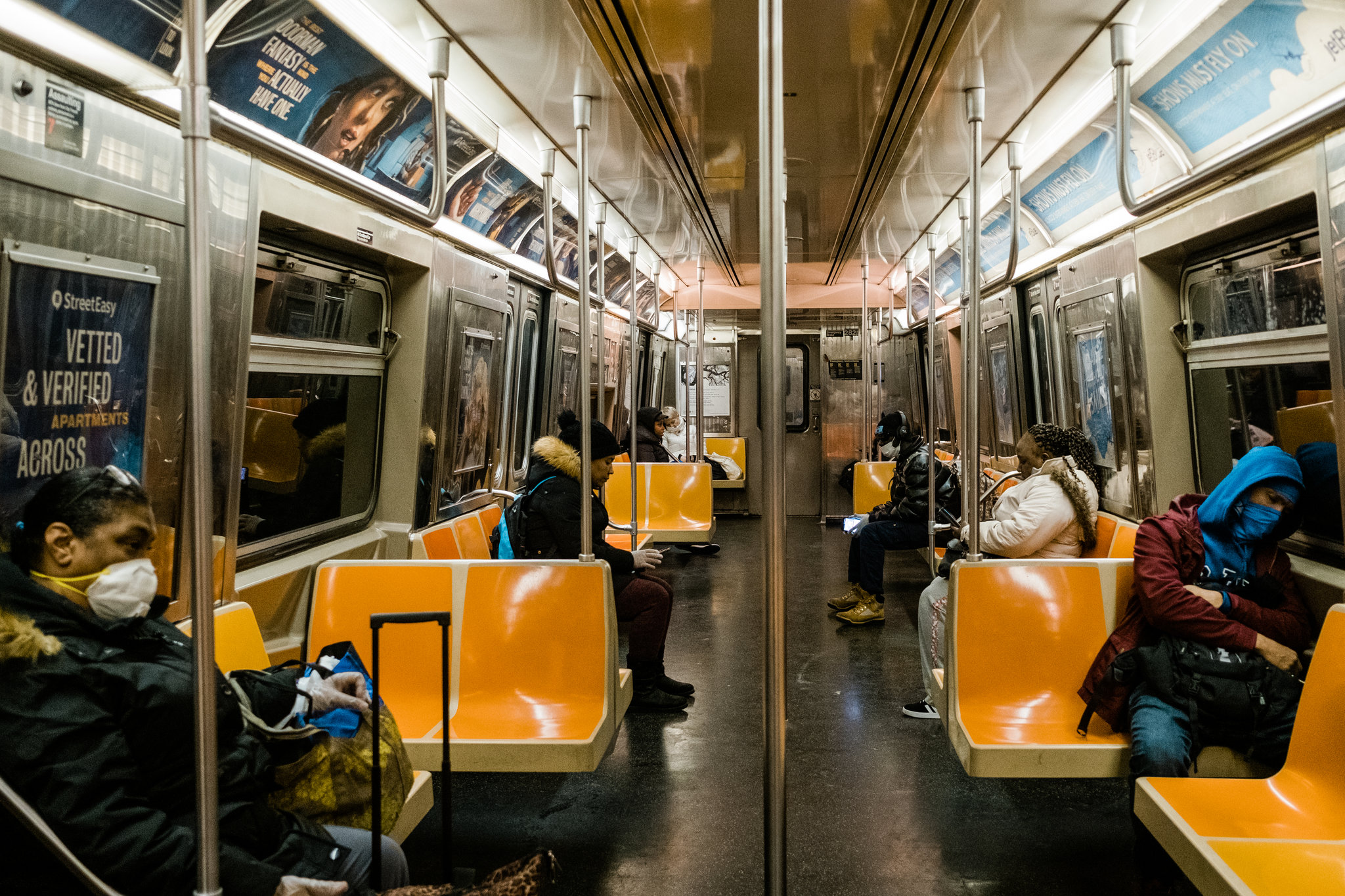
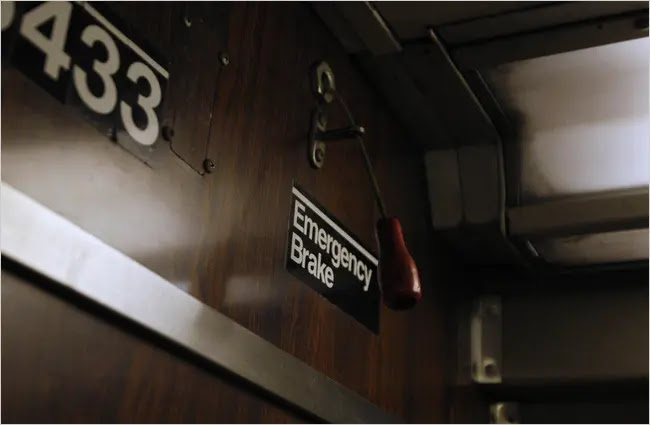
Subway cars have end doors where people can move between cars.  They have emergency brakes that stop a moving train, allowing for exiting.  Attached are photos.  Moreover, cars have emergency windows that can be removed to exit.  There is no excuse.  The MTA offers guidelines here mentioning the emergency windows and how to exit a subway car, see: http://new.mta.info/document/76901.  If not charged, this will empower people to kill others for any outburst, whether mental illness related or not. Even autistic people will be in danger depending on where on the spectrum they are on and if this causes them to behave violently. People will kill others just for being bumped on a train, bus, or sidewalk.  We cannot have this in a civilized society where the rule of law supersedes.  Jordan Neely had mental illness and was not helped. He could not help how he behaved due to it.  He did not deserve to be killed.  Attacking his character does nothing but turn the attacker into a despicable human being lacking morals and compassion.  Justice must be served.  The rule of law must matter.

In 2017, I served on a trial where a young man killed an elderly man with a metal pipe in the South Bronx. In the video, we saw both men arguing. The young man walks out of the store and the elderly man goes to the back of the bodega and grabs a pipe going after the young man.  We see another cell video of both arguing outside and the young man hitting the elderly man with a pipe.  Many of the jurors thought the younger guy was defending himself. However, I brought up the duty to retreat clause and before deliberation, the judge told us the law.  

I remember this when studying paralegal in high school.  We did internships at the Bronx Court House on the Grand Concourse and 161st.  Like conservatives on social media, the jury I was with assumed the young guy was legitimately defending himself. However, this was not the case.  He had a duty to retreat. The elderly man was really no threat. He easily took the pipe away from him.  Therefore, the young man could have left with the pipe, tossed it aside and left, or simply just called 911 while holding the pipe and not engaging the elderly man. Instead, he took the pipe away and began to beat the elderly man with him fracturing his cheekbone and skull overall.  A few of the jurors got upset with me because I took the case seriously. They just wanted to issue a verdict and go back to their jobs. They were worried about not getting a paycheck. I was more concerned about justice. 

Two young Dominican guys were even making snarky remarks causing the older jurors to shake their heads in disbelief and call them out for their immaturity.  Anyhow, me delay of the deliberation worked and the right decision was made that even the judge, district attorney, and court officers applauded us. 

The other jurors pointed me out as the reason for delaying deliberations.   We ended up deciding a guilty verdict for manslaughter against the young man. He may have thought he was defending himself because the elderly man went after him with a pipe, but that was not self-defense.  He had a duty to retreat.  Similarly, Neely was not truly a threat. Screaming and crying out for food is not a threat.  It is a disturbance of the peace.  


UPDATE May 12, 2023:  

Daniel Penny was charged and arrested. He was released on a 100k bond.  New details came in.  According to the DA, Neely entered the subway car and slammed his hand on the door in frustration. He cried out that he was hungry, and thirsty, and was not afraid to die.  He kept shouting and slammed his jacket on the floor. This was when Penny came from behind and grabbed him in a chokehold taking him down. As this was going on, the train was pulling into the station.  These details are significant because they show that there was no self-defense here. Penny grabbed him from behind. Neely was just shouting making a scene.  

Moreover, some claim that a moving train is impossible to retreat from, however, the train was pulling into the station which would have allowed people to exit immediately onto the platform and notify 911, MTA workers, or any police that may be around.  So, it makes sense for Penny to face charges.  The other riders were also complicit in the death of Neely and need to be charged as well.  

A crowdfunding for Daniel Penny has also raised over 2 million dollars while one for Neely's funeral cost raises almost $150,000. We can see here the discrepancy. Many people simply do not understand how self-defense works and attack people with mental illness and/or criminal records. We are a nation of law. Nobody can take the law into their own hands. We cannot have vigilantes running around. Those with mental illness and/or criminal records cannot be set aside like pariahs and sentenced to death merely on the aforementioned. People have dignity and equal protection under the law.  Having a mental illness and/or a criminal record does not devalue a human being. We all make mistakes. We all sin.  The real culprit here is New York City, a city that does nothing to help the disenfranchised.  Daniel Penny and others should not be placed in a position to choose to police the subways or streets.  No amount of money raised can undo what the law states nor erase what videos show and what witnesses state.  Penny's lawyer claims there is more video and that his client rendered aid. These will most likely not be enough to sway a jury of people who will most likely be liberal and conscious of how Black, mentally ill people and the homeless have been neglected in this nation.  

We also have to do better. Black people are automatically seen as violent or the main source of crimes by some from every race. This is just wrong.  The cries that Neely deserved it simply because he had a criminal record or was mentally ill are inhumane. It shows pure hate in these people.  Racism is clearly alive and well in many people even in the 21st century.  Those defending Daniel Perry must do so on reason and facts, not because he is a Marine or Caucasian. Everyone should know after Eric Gardner that not even cops can use a chokehold to restrain someone.  If cops cannot use it what makes you think a Marine or civilian can use it?  What we saw in the video was clearly a killing.  Penny should have known what a chokehold does.  Would Neely have received the same treatment and adulation if he was the Caucasian Marine and Penny was the deranged homeless man?  It is disturbing to even ask after we have seen Caucasian perpetrators treated better than non-Caucasians even after being arrested.  We must reflect on this.  The law, facts, and evidence are what must matter, nothing else.   We cannot have favoritism nor set aside the law for our misunderstanding of self-defense.  If we do this, America will become a wild-wild-west with people settling things outside and killing each other.  

This does not mean self-defense is wrong. The Catechism of the Catholic Church has this to say:

Legitimate defense
2263 The legitimate defense of persons and societies is not an exception to the prohibition against the murder of the innocent that constitutes intentional killing. "The act of self-defense can have a double effect: the preservation of one's own life; and the killing of the aggressor.... The one is intended, the other is not." 65

2264 Love toward oneself remains a fundamental principle of morality. Therefore it is legitimate to insist on respect for one's own right to life. Someone who defends his life is not guilty of murder even if he is forced to deal his aggressor a lethal blow:

If a man in self-defense uses more than necessary violence, it will be unlawful: whereas if he repels force with moderation, his defense will be lawful.... Nor is it necessary for salvation that a man omit the act of moderate self-defense to avoid killing the other man, since one is bound to take more care of one's own life than of another's. 66
2265 Legitimate defense can be not only a right but a grave duty for one who is responsible for the lives of others. The defense of the common good requires that an unjust aggressor be rendered unable to cause harm. For this reason, those who legitimately hold authority also have the right to use arms to repel aggressors against the civil community entrusted to their responsibility.

2266 The efforts of the state to curb the spread of behavior harmful to people's rights and to the basic rules of civil society correspond to the requirement of safeguarding the common good. Legitimate public authority has the right and the duty to inflict punishment proportionate to the gravity of the offense. Punishment has the primary aim of redressing the disorder introduced by the offense. When it is willingly accepted by the guilty party, it assumes the value of expiation. Punishment then, in addition to defending public order and protecting people's safety, has a medicinal purpose: as far as possible, it must contribute to the correction of the guilty party. 67

2267 Recourse to the death penalty on the part of legitimate authority, following a fair trial, was long considered an appropriate response to the gravity of certain crimes and an acceptable, albeit extreme, means of safeguarding the common good. Today, however, there is an increasing awareness that the dignity of the person is not lost even after the commission of very serious crimes. In addition, a new understanding has emerged of the significance of penal sanctions imposed by the state. Lastly, more effective systems of detention have been developed, which ensure the due protection of citizens but, at the same time, do not definitively deprive the guilty of the possibility of redemption. Consequently, the Church teaches, in the light of the Gospel, that "the death penalty is inadmissible because it is an attack on the inviolability and dignity of the person",68 and she works with determination for its abolition worldwide. [CatholicCulture.org Note: Pope Francis replaced the original Latin text with this paragraph in 2018.]

Notes:
65 St. Thomas Aquinas, STh II-II, 64, 7, corp. art.
66 St. Thomas Aquinas, STh II-II, 64, 7, corp. art.

67 Cf. Lk 23:40-43. NT John Paul II, Evangelium vitae 56.

English Translation of the Cathechism of the Catholic Church for the United States of America © 1997, United States Catholic Conference, Inc.


Self-defense is necessary to preserve one's life and that of others, however, it must be done within ethical parameters. We simply cannot kill someone who bumps into us, taps us, spits on us, throws something at us and so on.  

UPDATE June 12, 2023: 

Daniel Penny released a video explaining what happened. In effect, he incriminated himself in the process.

UPDATE June 14, 2023

Daniel Penny was just indicted by a grand jury. The charges are now official and he will face them in court.


UPDATE June 28, 2023

Daniel Penny appeared in court this morning and entered a NOT GUILTY plea.  Here are the charges:


THE GRAND JURY OF THE COUNTY OF NEW YORK, by this indictment, accuses the defendant of the crime of MANSLAUGHTER IN THE SECOND DEGREE, in violation of Penal Law §125.15(1), committed as follows: The defendant, in the County of New York, on or about May 1, 2023, recklessly caused the death of Jordan Neely. 

SECOND COUNT: AND THE GRAND JURY AFORESAID, by this indictment, further accuses the defendant of the crime of CRIMINALLY NEGLIGENT HOMICIDE, in violation of Penal Law §125.10, committed as follows: The defendant, in the County of New York, on or about May 1, 2023, with criminal negligence, caused the death of Jordan Neely. ALVIN L. BRAGG, JR 

UPDATE January 17, 2024

Attorneys fo Daniel Penny filed a motion to get the case dismissed. The judge rejected that motion. Penny will have to face trial for killing Jordan Neely possibly in the fall of 2024. He is scheduled to appear in court again in March 2024.


What do you think? Post below on Disqus. Be sure to follow the rules for posting.  


Source:


https://ypdcrime.com/penal.law/article35.php

https://reason.com/volokh/2020/12/21/duty-to-retreat-35-states-vs-stand-your-ground-15-states/

http://new.mta.info/document/76901

https://www.washingtonpost.com/nation/2023/05/13/daniel-penny-jordan-neely-conservatives/

https://www.nydailynews.com/opinion/ny-oped-greene-daniel-penny-arrest-jordan-neely-20230514-happ5mbvofghzih3xoiq5zzkla-story.html

https://www.independent.co.uk/news/world/americas/crime/daniel-penny-story-jordan-neely-republicans-b2339467.html

https://nypost.com/2023/05/15/legal-fund-for-accused-nyc-subway-choker-daniel-penny-tops-2m-with-kid-rock-chipping-in/

https://thehill.com/homenews/state-watch/4003104-jordan-neelys-chokehold-death-on-nyc-subway-what-has-happened-so-far/

https://news.yahoo.com/kid-rock-big-donor-legal-010406488.html

https://www.foxnews.com/us/jordan-neely-death-marine-vet-daniel-pennys-attorneys-raise-more-than-1-5m-for-legal-defense

https://www.nydailynews.com/news/politics/new-york-elections-government/ny-mayor-adams-jordan-neely-daniel-penny-f-train-chokehold-silence-20230516-7dvrqiuksrfudoa4tlkknmaomq-story.html

https://www.cnn.com/2023/05/12/us/jordan-neely-daniel-penny-new-york-subway-death-charge/index.html

https://www.usatoday.com/story/news/nation/2023/05/13/daniel-penny-jordan-neely-charges-update/70213559007/

https://www.nytimes.com/2023/05/14/nyregion/daniel-penny-jordan-neely-conservative.html


UPDATED Source June 28, 2023

Daniel Penny pleads not guilty to manslaughter, criminally negligent homicide charges | amNewYork (amny.com)

Daniel Penny pleads not guilty in Jordan Neely NYC subway chokehold death - The Washington Post

US Marine vet Daniel Penny pleads not guilty to manslaughter in chokehold death of Jordan Neely | Fox News


UPDATED Source January 17, 2024

https://www.foxnews.com/us/ny-judge-consider-marine-vet-daniel-pennys-motion-dismiss-case-jordan-neely-subway-chokehold-death

https://abc7ny.com/daniel-penny-jordan-neely-subway-chokehold-death-nyc/14331371/

https://www.nbcnewyork.com/news/local/daniel-penny-homicide-jordan-neely-chokehold-subway/5047919/

https://abcnews.go.com/US/daniel-penny-returns-court-dismissal-hearing-nyc-subway/story?id=106422808

Wednesday, September 25, 2019

Fr. Dwight Longenecker Abuses (Cyber bullies) Teen Girl

Editor's Note: We received correspondence via email from Father Longenecker requesting to remove this post. He voiced concern over the article and the hook "abuses teen girl." We decided to keep the article up and amended the title to include (Cyber Bullies) to indicate the type of abuse, despite the article's context showing the abuse is cyber-related and not in any other way. 

It seems so-called "traditionalists" or "conservative" Catholics have lost their sense of shame and whatever intelligence they had left. First, we remember Father Z who made ridiculous comments regarding the Vatican light show (see: http://www.sacerdotus.com/2015/12/father-zany-vatican-lights-and-other.html). We all pretty much lost respect for him after this. I unfollowed him as I could no longer take him seriously. Then, we saw how Dr. Taylor Marshall engaged in implicit racism by setting aside decency in favor of scrupulosity that was offensive to Africans (see: http://www.sacerdotus.com/2019/09/racism-from-mundabor-taylor-marshall-so.html). His criticism of a chasuble worn by Pope Francis which represented cultural elements of the African people showed his disdain for non-whites and indirectly presented itself as white supremacy. Well, now we have another one who demonstrated ageism and hate against people with disabilities.

As many of you know, we are in the middle of summits at the United Nation. Every year around this time, leaders from the world gather in New York City to discuss issues that concern the globe. During one session, a young 16-year-old girl named Greta Thunberg from Sweden gave a very powerful speech about Climate Change. I have come to call it the "How dare you" speech. In this speech, she called out the failure of world leaders to engage the crisis with global warming. Here is the speech:


This young girl was met with attacks from those in the conservative faction of politics. They mocked her face, accent, attacked her tone, and worse of all, attacked her disability. Greta has Asperger. No one can expect this sort of puerile behavior from political fanatics, but how about from a Catholic priest? Well, this is exactly what we have witnessed. Fr. Longenecker, a convert and married Catholic priest from the Charleston diocese posted a tweet mocking this young lady. He posted this tweet:


Screenshot of Tweet


The tweet was met with disgust by Catholics and others who value decency, and rightfully so. The tweet had angered many people from all walks of life. Fr. Matthew of the Legionaries of Christ and who calls himself the "Autistic Priest" gave an excellent response and fraternal correction:


Other clerics and laypeople joined in the fraternal correction of Fr. Longenecker's tweet. Here are some of their tweets:


Fr. Longenecker responsed with a different tone which came across as immature and childish. He began to act nonchalant and smug, using gifs to dismiss the concerns of people:


However, some returned the favor and mocked his appearance:


There is not much I can state regarding this other than Fr. Longenecker was out of line. He was either drunk when he posted this tweet or showed his true colors. How can a priest make fun of a young girl with Asperger's? Where is his morals? I understand people can be overly passionate over the climate change issue, but to attack a child over it? The fact that this is coming from a Catholic priest makes it worse.

In light of the scandals with priests, it was not wise for Fr. Longenecker to post such nonsense which is abusive and offensive. He is abusing a young female child by cyber-bullying her. I cannot imagine how parishioners at parishes Fr. Longenecker works at must feel. They must be thinking as to whether or not he is mocking their own daughters. As the saying goes, children are off-limits when it comes to criticism.

Fr. Longenecker believes this is a joke which tells us that he is not well educated in communication and sensitivity training. As a quasi-representative of the Catholic Church, he has to know that optics matter. The Catholic Church is under the scope now due to scandals. For him to be making fun of a girl with Asperger is distasteful and presents itself as an arrogant priest acting high and mighty above others. Perhaps Fr. Longenecker should read Proverbs 19:29 which says, "Those who make fun of others will be judged. Foolish people will be punished."

Then again, based on Longenecker's reaction, he does not seem to care who he offends and has no idea that what he did was wrong and sinful. This may be a sign of dissociative personality disorder.  It may also be that this is just how so-called "traditionalist" or "conservative" people behave. They rely on ignorance and puerile behavior to push talking points instead of actual facts. This is not surprising with Longenecker since he hangs out with others who do the same. Birds of a feather...?  Look at his company from these screenshots:
Who Were the Historical Wise Men? Dr Marshall Interviews Fr Longenecker on Mystery of the Magi - Taylor Marshall


In Which Fr Z Gets Noticed by Big Media – Fr. Dwight Longenecker
 

Let us see if Fr. Longenecker will find it funny when people storm his diocese asking for him to be disciplined. I am sure many have already contacted the diocese and parish where he is stationed at. I advise readers to voice their concerns as well.

Diocese of Charleston
901 Orange Grove Road,
Charleston, SC 29407
Phone: 843-261-0420
https://charlestondiocese.org/


Father Dwight Longenecker Pastor
Phone: (864) 422-1648 ext 210
Email: dlongenecker@charlestondiocese.org
https://olrgreenville.com/home/our-parish/meet-the-parish-staff/


What do you think? Post below on Disqus. Remember to follow the rules on commenting.


Wednesday, November 1, 2017

New Treatments for Autism

Autism is a mystery to the medical field. However, we are making some advances in trying to figure it out and how to treat it. A new study published in Nature by the Brain Institute at UT Southwestern Medical Center shows some promising hope.  There may be a chance that normal brain function can be restored in people with autism.  Autism causes all kinds of cognitive delays. The direct cause of autism is still unknown; however, scientists are aware that KCTD13, which is a gene, is related to autism.

In the study, KCTD13 was deleted in mice. The results were an overgrowth in the brain which caused a reduction in synaptic connections. This was due to the RhoA protein which increased and collected in the absence of the KCTD13 gene.  When scientists used drugs that decreased the levels of RhoA, they noticed that within four hours, the brain was restored to normal functioning.

This may be promising for humans with autism.  Autism may be totally removed from individuals or the condition may be improved to the point where a person with autism can function normally.   


Source:

doi:10.1038/nature24470

http://neurosciencenews.com/autism-brain-connections-7853/

Monday, March 2, 2015

"Big Brain" Gene Discovered

Since the theory of Evolution took hold in the scientific community, Biologists, Neurologists, Psychologists and others have pondered why human beings have "high intelligence" capacities as opposed to our close relatives, the chimpanzees.

Some so-called "ancient astronaut theorists" have posited the idea that perhaps ancient extraterrestrials "fixed" the primordial slime that would become human beings millions of years later by placing their own genes or modified genes. There was even a movie on this in 2012 whose storyline presented a group of scientists going to a far away moon to meet the "engineers" who "created" the human race.  This, of course, is just a product of the overactive imagination and has no scientific basis.

Well, scientists have found the "big-brain" gene, or ARHGAP11B which allows human beings to have greater intelligence than our relatives in the hominid family. This gene is believed to be specific to humans and humanoids of the past: Neanderthals and Denisovans.  The gene is just 804 characters long and allows the neocortex of the brain to produce more neurons.  The neocortex is found in mammals and is about 4 mm thick. It contains six layers of grey matter and surrounds the white matter in the cerebrum. The neocortex makes up about 77% of the volume of the human brain. This region allows for reasoning, advanced memory, speech, vision, advanced motor and sensory control and other biological functions unique to human beings.

This gene can give much insight on the brain and perhaps may lead to a better understanding of autism and other neurological differences that are considered a deviance from the norm.


Source:

http://www.scientificamerican.com/article/big-brain-gene-allowed-for-evolutionary-expansion-of-our-neocortex/

http://www.dailymail.co.uk/sciencetech/article-2972875/Big-brain-DNA-humans-Single-gene-intelligent-chimps-identified-time.html

https://www.sciencenews.org/article/genetic-tweaks-built-humans%E2%80%99-bigger-brains

http://www.livescience.com/49960-human-big-brain-gene-found.html

http://www.nbcnews.com/science/science-news/big-brain-gene-found-humans-not-chimps-n313861


Sacerdotus TV LIveStream

Labels

Catholic Church (1472) Jesus (680) God (667) Bible (563) Atheism (385) Jesus Christ (376) Pope Francis (333) Liturgy of the Word (298) Atheist (267) Science (224) Apologetics (211) Christianity (192) LGBT (147) Theology (133) Liturgy (121) Blessed Virgin Mary (113) Abortion (97) Gay (92) Pope Benedict XVI (91) Prayer (90) Philosophy (85) Rosa Rubicondior (82) Traditionalists (73) Vatican (72) Psychology (69) Physics (68) Christmas (64) President Obama (59) Christian (58) New York City (58) Holy Eucharist (56) Protestant (46) Biology (45) Health (45) Politics (45) Vatican II (45) Women (43) Gospel (39) Racism (37) Supreme Court (35) Baseball (34) Illegal Immigrants (32) Pope John Paul II (31) NYPD (30) Death (29) priests (29) Astrophysics (27) Religious Freedom (27) Space (27) Priesthood (26) Donald Trump (24) Eucharist (24) Evangelization (24) Jewish (24) Morality (24) Christ (22) Evil (22) First Amendment (21) Pro Abortion (19) Child Abuse (17) Divine Mercy (17) Marriage (17) Pedophilia (17) Pro Choice (17) Easter Sunday (16) Police (16) Autism (14) Gender Theory (14) Holy Trinity (13) Pentecostals (13) Poverty (13) Blog (12) Cognitive Psychology (12) Muslims (12) Sacraments (12) September 11 (12) CUNY (11) Hispanics (11) Pope Paul VI (10) academia (10) Evidence (9) Massimo Pigliucci (9) Personhood (9) Podcast (9) Angels (8) Barack Obama (8) Big Bang Theory (8) Evangelicals (8) Human Rights (8) Humanism (8) Condoms (7) David Viviano (7) Eastern Orthodox (7) Ellif_dwulfe (7) Hell (7) NY Yankees (7) Spiritual Life (7) Gender Dysphoria Disorder (6) Babies (5) Baby Jesus (5) Catholic Bloggers (5) Cyber Bullying (5) Donations (5) Pope Pius XII (5) The Walking Dead (5) Ephebophilia (4) Plenary Indulgence (4) Pluto (4) Pope John XXIII (4) Death penalty (3) Encyclical (3) Founding Fathers (3) Dan Arel (2) Freeatheism (2) Oxfam (2) Penn Jillette (2) Pew Research Center (2) Cursillo (1) Dan Savage (1) Divine Providence (1) Fear The Walking Dead (1) Pentecostales (1)