Showing posts with label Subway. Show all posts

Monday, July 28, 2025

NYC Subway Surfing & How To Stop It.. For Real!

Subway Surfing in NYC: A Deadly Trend and the Search for Solutions

In recent years, New York City’s subway system, a sprawling network that transports millions daily, has become the stage for a dangerous and deadly trend: subway surfing. This reckless activity involves individuals, predominantly teenagers, riding on the roofs or sides of moving subway trains, often filming their stunts for social media clout. What began as a niche act of rebellion has escalated into a public safety crisis, claiming lives and challenging the city’s ability to protect its youth. Despite multiple interventions—from NYPD crackdowns to social media campaigns and even drone surveillance—the problem persists. Adolescents continue to risk their lives, driven by a sense of invulnerability and the allure of viral fame. This blog post explores the dangers of subway surfing, the failed attempts to curb it, and proposes a novel solution: installing anti-pigeon spikes on train roofs to physically deter this behavior.


The Rise of Subway Surfing

Subway surfing is not a new phenomenon, but its resurgence in the social media era has amplified its visibility and appeal. Young people climb onto the roofs of subway trains, often the 7 or J lines in Queens and Brooklyn, where trains run above ground, or cling to the sides of cars, balancing precariously as trains speed through the city. Videos of these stunts flood platforms like TikTok and Instagram, garnering thousands of views and likes. For many teens, subway surfing is a thrill-seeking act, a way to assert independence and gain peer recognition in a digital age where attention is currency.

The statistics are grim. According to the New York City Metropolitan Transportation Authority (MTA), subway surfing incidents have surged in recent years, with 2023 seeing a reported 400% increase in incidents compared to a decade prior (MTA, 2023). The consequences are often catastrophic: in 2024 alone, at least five teenagers died from falls off moving trains, with others suffering severe injuries, including head trauma from collisions with tunnel entrances (NYC Department of Health, 2024). The MTA and city officials have labeled subway surfing a public health crisis, yet the behavior persists, fueled by the psychology of adolescence and the amplifying effect of social media.


The Psychology of Adolescent Risk-Taking

To understand why subway surfing has taken hold among NYC’s youth, we must consider the psychology of adolescence. Teenagers are wired to take risks. During adolescence, the brain’s prefrontal cortex, responsible for impulse control and long-term planning, is still developing, while the limbic system, which drives reward-seeking behavior, is in overdrive (Steinberg, 2014). This creates a perfect storm: teens are drawn to high-risk, high-reward activities, seeking thrills and social validation while underestimating danger.

This sense of invulnerability is a hallmark of adolescent psychology. Studies show that teenagers often exhibit an “invincibility fable,” a cognitive bias where they believe they are immune to harm (Elkind, 1967). For subway surfers, this manifests as a belief that they can outsmart the train’s speed, balance on a moving car, or escape injury in a tunnel. The promise of social media fame further fuels this behavior. A single viral video can elevate a teen’s status among peers, providing a dopamine hit that outweighs perceived risks (Casey et al., 2011). As one 16-year-old subway surfer told The New York Times, “It’s not about being stupid—it’s about showing you’re fearless” (NYT, 2023).

This psychological profile complicates efforts to curb subway surfing. Traditional warnings and punishments often fail to resonate with teens who feel invincible and prioritize peer approval over safety. The MTA and city officials have tried multiple strategies to address the issue, but as we’ll see, these efforts have fallen short.


Failed Interventions: NYPD Crackdowns

The first major response to subway surfing came from the New York Police Department (NYPD). In 2022, as incidents spiked, the NYPD deployed additional officers to subway stations and trains, particularly in high-risk areas like Flushing and Jamaica, where elevated tracks make surfing more feasible. Officers patrolled platforms, issued summonses, and arrested individuals caught in the act. The MTA reported a temporary dip in incidents, but the effect was short-lived (MTA, 2022).

The NYPD’s approach faced several limitations. First, the subway system is vast, with 472 stations and over 600 miles of track (MTA, 2025). Policing every train and station is logistically impossible, especially with the NYPD’s staffing shortages, which have been well-documented (NYPD, 2024). Second, arrests and fines often failed to deter teens, who viewed legal consequences as less significant than the social rewards of surfing. For many, an arrest was a badge of honor, further fueling their bravado. Finally, the NYPD’s presence sometimes escalated tensions, with some community advocates arguing that heavy-handed policing alienated the very youth they aimed to protect (Community Board 7, Queens, 2023).

By 2023, it was clear that law enforcement alone could not solve the problem. The MTA and city officials turned to a new strategy: social media campaigns targeting young people directly.


Social Media Campaigns: A Missed Mark

Recognizing that subway surfing was fueled by social media, the MTA launched a series of awareness campaigns in 2023, aimed at dissuading teens through the same platforms they used to share their stunts. The “Ride Inside, Stay Alive” campaign featured influencers, PSA videos, and hashtags like DontSurfTheSubway, designed to appeal to Gen Z sensibilities. The MTA partnered with TikTok creators to produce content highlighting the dangers of subway surfing, including graphic depictions of injuries and testimonials from families of victims (MTA, 2023).

While well-intentioned, the campaign largely failed to resonate. Teens dismissed the PSAs as preachy and out-of-touch, with some mocking them in comment sections. One viral response video featured a teen sarcastically imitating an MTA ad while standing on a train roof, garnering over 100,000 views (TikTok Analytics, 2023). The campaign’s reliance on influencers also backfired; many teens saw through the corporate messaging, viewing it as an attempt to co-opt their culture rather than engage authentically.

The failure of social media campaigns underscores a key challenge: adolescents are skeptical of authority-driven messages, especially when they conflict with the thrill-seeking culture of platforms like TikTok. As Dr. Laurence Steinberg, a leading expert on adolescent behavior, notes, “Teens are more likely to listen to peers than adults, especially when the message feels like a lecture” (Steinberg, 2014). The MTA’s campaign, while creative, did not account for this dynamic, leaving the problem unresolved.


Drones: A Partial Success

In 2024, the MTA and NYPD pivoted to a high-tech solution: drones. Equipped with cameras and real-time monitoring capabilities, drones were deployed to patrol elevated subway tracks, particularly along the 7 and J lines. The goal was to deter surfers by increasing surveillance and enabling rapid response from law enforcement. Drones could spot teens on train roofs from a distance, alerting conductors to slow or stop trains and allowing police to intervene before incidents escalated (NYPD, 2024).

The drone program showed promise. In the first six months of 2024, the MTA reported a 20% reduction in subway surfing incidents on monitored lines (MTA, 2024). Drones also helped identify repeat offenders, leading to targeted interventions like community service or counseling. However, the program’s limitations soon became apparent. Drones are expensive to operate, requiring trained personnel and maintenance costs that strain the MTA’s budget. They also struggle to cover the entire subway system, leaving gaps where surfers can evade detection. Most critically, drones do not address the root causes of subway surfing: the psychological drive for risk and the social incentives of viral fame.

Tragically, the death toll continues to rise. In July 2024, a 15-year-old fell from a 7 train in Queens, suffering fatal injuries after striking a track signal (NYC Department of Health, 2024). Another teen lost his life in Brooklyn when he bashed his head against a tunnel entrance while surfing a J train (NYPD, 2024). These incidents highlight the urgent need for a more effective solution—one that physically prevents subway surfing rather than relying on deterrence or persuasion.


A Proposed Solution: Anti-Pigeon Spikes on Train Roofs

To address subway surfing at its source, the MTA should consider a physical deterrent: installing anti-pigeon spikes on the roofs of subway trains. These spikes, commonly used to prevent birds from perching on building ledges and roofs, are inexpensive, durable, and effective. By covering train roofs with spikes, the MTA could make it physically impossible for individuals to stand or balance, eliminating the feasibility of subway surfing.

Anti-pigeon spikes are typically made of stainless steel or polycarbonate, with pointed ends that deter birds without causing significant injury. When applied to train roofs, they would create an uneven, uncomfortable surface, making it impossible for surfers to maintain footing, especially on a moving train. The motion of a subway car—already a challenge for balance—would be exacerbated by the spikes, forcing would-be surfers to abandon the attempt or risk painful foot injuries. Unlike drones or police patrols, spikes require no ongoing monitoring, offering a passive, low-maintenance solution.

The concept draws inspiration from urban design strategies that use physical barriers to shape behavior, such as bollards to prevent vehicle ramming or textured surfaces for accessibility. Studies on environmental design show that altering physical spaces can significantly reduce undesirable behaviors, particularly among risk-taking populations (Cozens, 2008). For subway surfing, spikes would directly counter the invincibility fable by making the act physically untenable, bypassing the psychological barriers that render warnings ineffective.

Implementation would be straightforward. The MTA could retrofit train roofs during routine maintenance, with costs estimated at $500–$1,000 per car, based on similar installations for bird control (Pest Control NYC, 2025). With approximately 6,000 subway cars in the MTA’s fleet, the total cost would be a fraction of the millions spent annually on drone surveillance and NYPD overtime. Spikes are also weather-resistant and require minimal upkeep, making them a cost-effective long-term solution.

Critics might argue that spikes could pose safety risks, such as injuring maintenance workers or trapping debris. However, these concerns can be mitigated through proper design—blunt-tipped spikes, for example, deter without causing serious harm—and regular inspections. Another concern is that teens might find alternative ways to surf, such as clinging to train sides. While this risk exists, the spikes would still eliminate the most common and deadly form of subway surfing: roof-riding.


Addressing the Broader Context

While spikes offer a practical solution, they must be part of a broader strategy. Community engagement is critical to address the social and psychological drivers of subway surfing. Schools, youth organizations, and parents should work together to provide safe outlets for thrill-seeking, such as skate parks or adventure programs, which can channel teens’ energy into less dangerous activities. Social media platforms also have a role to play, by cracking down on subway surfing videos and promoting positive role models who advocate for safety.

Education campaigns should focus on peer-led messaging, leveraging the influence of youth culture to shift norms. As Steinberg (2014) suggests, “Adolescents are more likely to change behavior when they see peers modeling safer choices.” The MTA could partner with local youth groups to create authentic, grassroots campaigns that resonate with teens, avoiding the pitfalls of top-down PSAs.


Conclusion

Subway surfing in NYC is a deadly epidemic, driven by the collision of adolescent psychology and social media’s amplifying effect. The NYPD’s crackdowns, social media campaigns, and drone surveillance have all fallen short, unable to overcome teens’ sense of invulnerability or the allure of viral fame. Anti-pigeon spikes on train roofs offer a promising solution, physically preventing the act while requiring minimal resources. Combined with community-based efforts to engage youth and shift cultural norms, this approach could save lives and end the tragic toll of subway surfing. The time to act is now—before another young life is lost to the tracks.


References

- Casey, B. J., Jones, R. M., & Hare, T. A. (2011). The adolescent brain. Annals of the New York Academy of Sciences, 1124(1), 111–126.

- Cozens, P. (2008). Crime prevention through environmental design. Environmental Criminology and Crime Analysis, 153–177.

- Elkind, D. (1967). Egocentrism in adolescence. Child Development, 38(4), 1025–1034.

- MTA. (2022). Annual safety report. Metropolitan Transportation Authority.

- MTA. (2023). “Ride Inside, Stay Alive” campaign overview. Metropolitan Transportation Authority.

- MTA. (2024). Drone surveillance program results. Metropolitan Transportation Authority.

- MTA. (2025). Subway system overview. Metropolitan Transportation Authority.

- NYC Department of Health. (2024). Injury and mortality statistics. City of New York.

- NYPD. (2024). Subway safety enforcement data. New York Police Department.

- Pest Control NYC. (2025). Anti-pigeon spike installation costs. PestControlNYC.com.

- Steinberg, L. (2014). Age of Opportunity: Lessons from the New Science of Adolescence. Houghton Mifflin Harcourt.

- TikTok Analytics. (2023). Engagement metrics for subway surfing content. TikTok Platform Data.

- The New York Times. (2023). “Teens risk lives for subway surfing fame.” NYT.com.


Word count: 1,987

Tuesday, October 22, 2024

Trial Begins for Marine Daniel Penny

The trial of Daniel Penny, a former Marine charged with the chokehold death of Jordan Neely on a New York City subway, has garnered significant media attention and public interest. The case has raised important questions about racial justice and the safety of the city's subway system.

Daniel Penny, who is white, is accused of using excessive force against Jordan Neely, a Black man who was a well-known Michael Jackson impersonator. The incident, which occurred in May 2023, began with Neely reportedly acting aggressively on an F train in Manhattan. Penny's attorneys argue that he did not apply enough pressure for the hold to be deadly, while prosecutors maintain that the force used was excessive and resulted in Neely's death.

The trial of Daniel Penny, charged with the death of Jordan Neely, has been a focal point of national attention, raising significant discussions on law enforcement and race relations. As the trial progresses, various pieces of evidence have been presented to the court.

One of the key pieces of evidence is the bystander videos that captured the incident on the subway. These videos are crucial as they provide a visual account of the events leading up to Neely's death. The defense has argued that these videos show Penny acting in self-defense and protecting other passengers from Neely, who was reportedly acting aggressively.

Another significant piece of evidence is the statements made by Penny to the police following the incident. In these statements, Penny claimed that Neely was threatening people on the train, which prompted him to intervene. The prosecution is using these statements to argue that Penny acted recklessly, leading to Neely's death.

The medical examiner's report is also a critical piece of evidence, as it ruled Neely's cause of death as "compression of the neck." This finding is central to the prosecution's case, which argues that Penny's actions were excessive and directly resulted in Neely's death.

Furthermore, the defense plans to call a Marine with a black belt in karate as an expert witness. This individual is expected to testify that the hold applied by Penny was not fatal and did not constitute a chokehold.

The trial of Daniel Penny, a former Marine accused of the chokehold death of Jordan Neely, has presented a complex set of arguments from both the prosecution and the defense. The case has captured the public's attention, not only for the tragic loss of life but also for the broader implications it has on issues of race, law enforcement, and public safety.

From the prosecution's perspective, the argument hinges on the assertion that Penny used excessive force in a situation that did not warrant such a response. They point to the medical examiner's report, which classified Neely's death as a homicide by compression of the neck, as a key piece of evidence supporting their claim. The prosecution is likely to argue that Penny's actions were not in line with reasonable force and that his intervention led directly to Neely's death.

The defense, on the other hand, is expected to present a narrative that frames Penny's actions as a response to a perceived threat. They argue that Neely was acting aggressively and that Penny, with his background as a Marine, reacted to protect himself and other passengers. The defense is also likely to highlight the chaotic environment of the subway, suggesting that Penny's decision-making was influenced by the need to quickly address a volatile situation.

A key element of the defense's strategy is to introduce evidence that may contextualize Neely's behavior at the time of the incident. This includes the potential introduction of Neely's medical records and testimony regarding his alleged use of the drug K2, which the defense suggests could have contributed to a psychotic episode. The defense argues that this information is relevant to understanding the circumstances that led to the confrontation.

Both sides have faced challenges regarding the admissibility of evidence. The judge has denied motions to exclude certain pieces of evidence, indicating that the jury will be presented with a wide array of information to consider. This includes bystander videos of the incident, Penny's statements to the police, and expert testimony on the nature of the hold used by Penny.

As the trial progresses, the jury will be tasked with weighing the evidence and arguments presented by both sides. The outcome of this case will undoubtedly have a lasting impact on the community and contribute to the ongoing dialogue about the role of law enforcement in society. For those interested in following the trial, updates and detailed coverage are available from major news outlets.

As the trial continues, more evidence will likely be presented, and the jury will be tasked with determining the facts of the case. The outcome of this trial will have profound implications for the community and the ongoing conversation about justice and accountability in law enforcement. For ongoing updates and detailed coverage, the public can follow the reports from major news outlets.

The trial is expected to last six weeks, with jury selection having begun recently. The case has become a flashpoint in the nation's ongoing debate over racial justice, with protesters gathering outside the courthouse to express their views. The outcome of this trial will likely have a significant impact on public discourse regarding law enforcement and race relations in the United States.

The legal consequences for Daniel Penny, if convicted, could be severe. As the trial unfolds, the charges against Penny include manslaughter and criminally negligent homicide. The former charge carries a more significant weight, as it suggests a level of recklessness or intentional action leading to death. If found guilty of manslaughter, Penny could face up to 15 years in prison. On the other hand, the charge of criminally negligent homicide implies that Penny's alleged negligence led to Jordan Neely's death, which carries a potential sentence of up to four years.

The trial's outcome will hinge on the jury's interpretation of the evidence presented by both the prosecution and the defense. The prosecution's task is to prove beyond a reasonable doubt that Penny's actions were not only negligent but also criminally so, resulting in Neely's death. The defense, conversely, aims to establish that Penny's actions were justified under the circumstances and that he did not intend to cause harm.

It's important to note that the legal system aims to balance the scales of justice, taking into account the severity of the crime, the defendant's intent, and the circumstances surrounding the incident. The jury's verdict will ultimately determine the legal consequences for Penny, and the judge will impose a sentence based on that verdict, the law, and the guidelines provided for such cases.

The case has attracted public attention and sparked discussions about broader societal issues, including race relations and law enforcement practices. Regardless of the trial's outcome, the implications of this case will likely resonate beyond the courtroom, influencing public discourse and potentially affecting future legal proceedings in similar cases.

 In New York and 14 other states there is a duty to retreat clause. This means that citizens have a duty to escape or get away from a violent situation if the opportunity is there. If there is no option to retreat, then citizens can use force, even kill the assailant.  The duty to retreat does not apply to citizens when they are at home in New York and at home, place of work and car in other states.  The law varies from state to state. This is why it is important for people to educate themselves.  Many times people, particularly conservatives, think that it is okay to kill someone who attacks you. They claim it is a "right" to self-defense. This is not true. One cannot just kill an attacker and claim self-defense.  Since this case between Neely and Penny happened in New York City, we will focus on the law in New York State. You can read more about laws in other states here (https://reason.com/volokh/2020/12/21/duty-to-retreat-35-states-vs-stand-your-ground-15-states/).


In New York state, Artcile 35 of the penal code states:

  (c) The physical  force  involved  is  the  product  of  a  combat  by

agreement not specifically authorized by law.

  2.  A  person  may  not  use deadly physical force upon another person

under circumstances specified in subdivision one unless:

  (a) The actor reasonably believes that such other person is  using  or

about  to  use  deadly  physical  force. Even in such case, however, the

actor may not use deadly physical force if he or  she  knows  that  with

complete  personal safety, to oneself and others he or she may avoid the

necessity of so doing by retreating; except that the actor is  under  no

duty to retreat if he or she is:

  (i) in his or her dwelling and not the initial aggressor; or

  (ii) a police officer or peace officer or a person assisting a police

officer or a peace officer at the latter`s direction, acting pursuant to

section 35.30; or

  (b) He or she reasonably believes that such other person is committing

or attempting to commit a kidnapping, forcible rape,  forcible  criminal

sexual act or robbery; or

  (c) He or she reasonably believes that such other person is committing

or  attempting to commit a burglary, and the circumstances are such that

the use of deadly physical force is authorized by subdivision three of

section 35.20.


- https://ypdcrime.com/penal.law/article35.php   


So, as you read, there is a duty to retreat.  Daniel and the others had to retreat and not engage Neely unless there was no option to retreat. In light of this, Daniel Penny and the riders involved need to be charged for killing Jordan Neely. He broke the law (duty to retreat clause) of NY state. Screaming out for food, and water, or even throwing garbage does not warrant being choked to death.  Nor does having a criminal record.  Citizens cannot take the law into their own hands. This is not self-defense. Daniel and others had a duty to retreat.


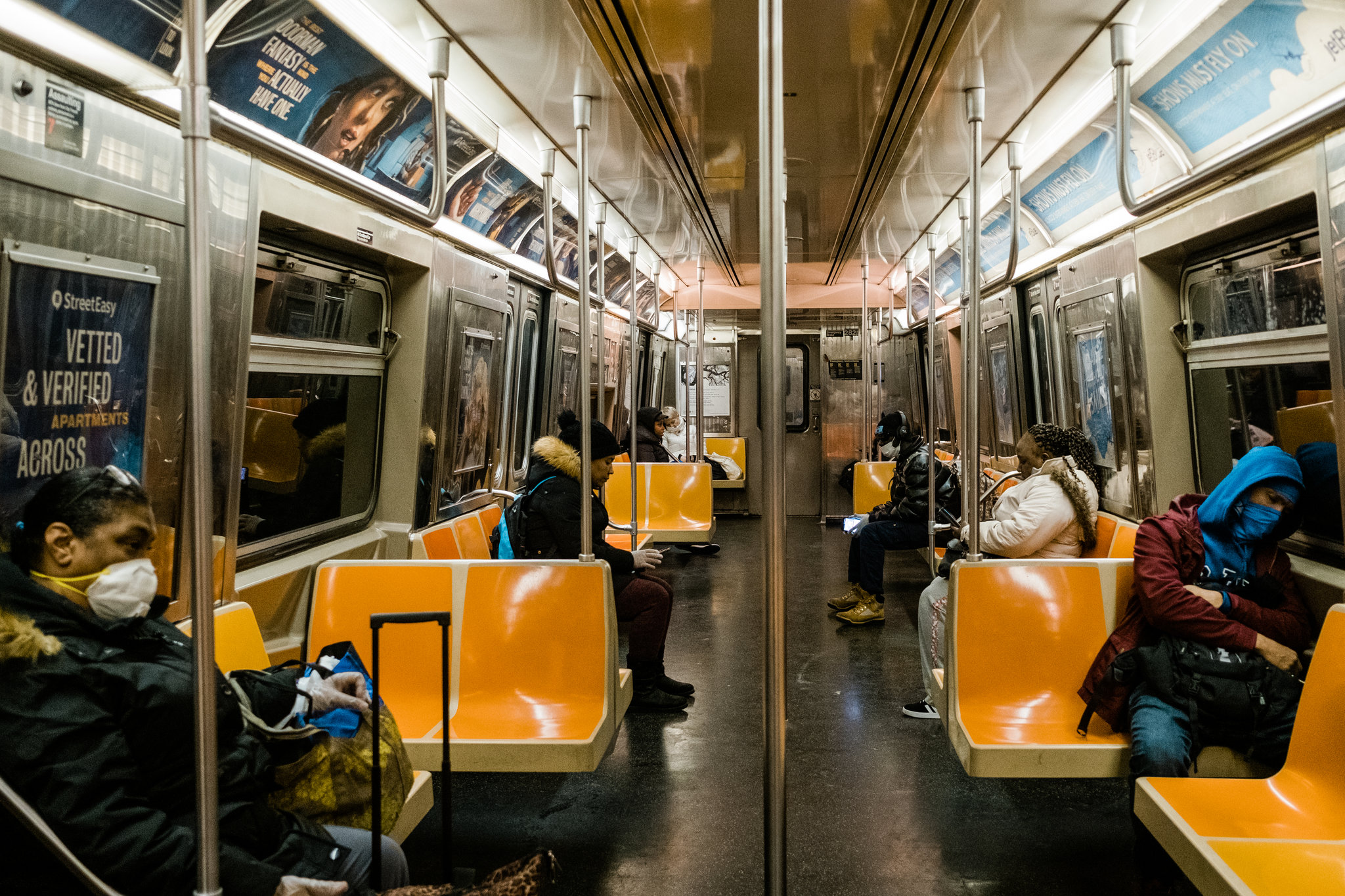
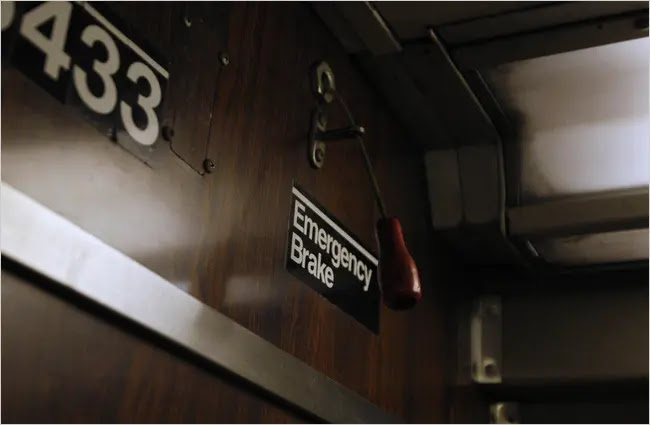
Subway cars have end doors where people can move between cars.  They have emergency brakes that stop a moving train, allowing for exiting.  Attached are photos.  Moreover, cars have emergency windows that can be removed to exit.  There is no excuse.  The MTA offers guidelines here mentioning the emergency windows and how to exit a subway car, see: http://new.mta.info/document/76901.  If not charged, this will empower people to kill others for any outburst, whether mental illness-related or not. Even autistic people will be in danger depending on where on the spectrum they are on and if this causes them to behave violently. People will kill others just for being bumped on a train, bus, or sidewalk.  We cannot have this in a civilized society where the rule of law supersedes.  Jordan Neely had a mental illness and was not helped. He could not help how he behaved due to it.  He did not deserve to be killed.  Attacking his character does nothing but turn the attacker into a despicable human being lacking morals and compassion.  Justice must be served.  The rule of law must matter.

In 2017, I served on a trial where a young man killed an elderly man with a metal pipe in the South Bronx. In the video, we saw both men arguing. The young man walks out of the store and the elderly man goes to the back of the bodega and grabs a pipe going after the young man.  We see another cell video of both arguing outside and the young man hitting the elderly man with a pipe.  Many of the jurors thought the younger guy was defending himself. However, I brought up the duty to retreat clause and before deliberation, the judge told us the law.  

I remember this when studying paralegal in high school.  We did internships at the Bronx Court House on the Grand Concourse and 161st.  Like conservatives on social media, the jury I was with assumed the young guy was legitimately defending himself. However, this was not the case.  He had a duty to retreat. The elderly man was really no threat. He easily took the pipe away from him.  Therefore, the young man could have left with the pipe, tossed it aside and left, or simply just called 911 while holding the pipe and not engaging the elderly man. Instead, he took the pipe away and began to beat the elderly man with him fracturing his cheekbone and skull overall.  A few of the jurors got upset with me because I took the case seriously. They just wanted to issue a verdict and go back to their jobs. They were worried about not getting a paycheck. I was more concerned about justice. 

Two young Dominican guys were even making snarky remarks causing the older jurors to shake their heads in disbelief and call them out for their immaturity.  Anyhow, me delay of the deliberation worked and the right decision was made that even the judge, district attorney, and court officers applauded us. 

The other jurors pointed me out as the reason for delaying deliberations.   We ended up deciding a guilty verdict for manslaughter against the young man. He may have thought he was defending himself because the elderly man went after him with a pipe, but that was not self-defense.  He had a duty to retreat.  Similarly, Neely was not truly a threat. Screaming and crying out for food is not a threat.  It is a disturbance of the peace.  


So as it stands, the defense of Daniel Penny will have a difficult time defending their client.  If Penny served in combat, perhaps a defense of Post Traumatic Stress Disorder may be used with doctors and psychologists vouching for Penny. They can say the events on the subway that day triggered Penny's trauma.  This may not exonerate him, but may lessen the charges and/or sentence later on.  There is a very high probability that Penny will be found guilty for the reasons stated above. We cannot have vigilantism, especially in a city like New York City. We cannot have mentally ill people or anyone acting erratically be choked to death or killed in any other manner just for their behavior.  We cannot have people believing that anything and everything warrants self-defense and that one can kill at will even if threatened.  

Nevertheless, some are politicizing this case. We now have Black Lives Matter and others turning this case into a racial one with some calling Penny a White Supremacist. We also have others attacking Neely and his reputation based on his past as if what happened in the past is relevant in the present case. They are also referencing his skin color as part of the problem or insinuating that Black people are a violent and criminally inclined group. 

Regardless of the outcome, this trial will bring about many protests and problems. If found guilty, people will claim injustice against Penny and will say there is a persecution of white men in liberal cities. If found innocent, people will come out claiming white privilege in favor of Penny and that Neely got no justice because he was Black, homeless, and mentally ill.  This may even lead to riots again as in the case of George Floyd's death.


Source:

Daniel Penny trial: Jury selection begins in case on NYC subway death

Trial to start for Daniel Penny after chokehold death of Jordan Neely on NYC subway

Daniel Penny trial begins: Jurors to be asked 'what would you do?'

Daniel Penny to Go on Trial for Fatally Choking Jordan Neely on Subway - The New York Times

Daniel Penny to Go on Trial for Fatally Choking Jordan Neely on Subway - The New York Times

https://www.foxnews.com/us/protesters-accuse-marine-vet-white-supremacy-jury-selection-begins-subway-vigilante-case


Wednesday, December 18, 2013

Blind Man & Dog Miracle

Sometimes in life we can know something will happen.  For example, when we hear that a train ran over someone, we automatically think of death.  However, God is the one who decides when our time is up on this Earth.

A recent event in New York City is being called a 'miracle.'

Cecil Williams was waiting for a subway train on 145th street when he felt dizzy.  Williams is blind and gets around with the help of 'Orlando," his seeing-eye-dog.  Orlando the dog seemed to sense that Williams was in trouble and tried hard to tug at him in an attempt to pull him away from the edge of the platform.  Unfortunately, Williams fell and the weight of his body was too much for the dog Orlando.  Both fell onto the tracks.

What happened next is both horrific and amazing.  An "A" train entering the station came in and was about to hit both Williams and Orlando.  The people on the platform signaled to the conductor to stop, but it was too late.  The motion along with the weight of the train would not allow for inertia to dissipate despite the breaks being activated.

The train ran over both Williams and Orlando.  People gasped in horror thinking they have witnessed two living creatures being crushed and mangled by the train.  However, as 2 and a half cars rolled over both,  they were alive and well.  Orlando was licking the face of Williams in an attempt to keep him alert.  When the trained was moved, emergency workers and onlookers were surprised to find Williams and Orlando alive and unharmed considering a subway train ran over them.  Both suffered only scratches from the fall.

Orlando is 11 years old and was scheduled to retired.  Williams wanted to keep him but could not afford the dog.  Thank God many generous people came to the rescue by donation enough for Williams to keep Orlando.

God surely had His angels protecting Williams and the brave dog Orlando.  This is truly a miracle and should remind us that God is always in control.  Whether we go or stay a little longer depends on God.  May Jesus Christ be praised!


Source:

http://abcnews.go.com/US/donors-blind-man-hero-dog-saved-subway-track/story?id=21263081

http://dailynightly.nbcnews.com/_news/2013/12/18/21955710-donations-allow-blind-man-to-keep-the-dog-that-saved-him

http://www.foxnews.com/us/2013/12/18/blind-man-guide-dog-survive-fall-onto-nyc-subway-tracks/

http://news.yahoo.com/blind-man-guide-dog-safe-subway-track-fall-003530174.html

http://www.nydailynews.com/new-york/uptown/blind-man-dog-injured-subway-station-article-1.1550257

http://www.cnn.com/2013/12/17/us/new-york-blind-man-subway-train/


Sacerdotus TV LIveStream

Labels

Catholic Church (1608) Jesus (750) God (739) Bible (609) Atheism (400) Jesus Christ (378) Pope Francis (344) Liturgy of the Word (319) Apologetics (283) Atheist (280) Science (238) Christianity (200) LGBT (148) Theology (146) Liturgy (139) Blessed Virgin Mary (124) Abortion (97) Prayer (97) Gay (95) Philosophy (92) Pope Benedict XVI (91) Traditionalists (83) Rosa Rubicondior (82) Physics (74) Psychology (74) Vatican (74) Christmas (64) Holy Eucharist (61) New York City (61) Christian (60) President Obama (59) Protestant (53) Vatican II (51) Biology (48) Health (47) Politics (46) Women (44) Gospel (43) Racism (40) Supreme Court (35) Baseball (34) Illegal Immigrants (32) NYPD (32) Pope John Paul II (32) priests (32) Death (31) Priesthood (29) Space (28) Astrophysics (27) Eucharist (27) Jewish (27) Morality (27) Religious Freedom (27) Donald Trump (25) Evangelization (25) Christ (22) Evil (22) First Amendment (21) Pro Abortion (19) Child Abuse (17) Divine Mercy (17) Marriage (17) Pedophilia (17) Pro Choice (17) Easter Sunday (16) Holy Trinity (16) Police (16) Sacraments (15) Autism (14) Gender Theory (14) Pentecostals (14) Angels (13) Poverty (13) September 11 (13) Blog (12) CUNY (12) Cognitive Psychology (12) Muslims (12) academia (12) Hispanics (11) Pope Paul VI (11) Massimo Pigliucci (10) Evidence (9) Hell (9) Personhood (9) Podcast (9) Barack Obama (8) Big Bang Theory (8) Evangelicals (8) Human Rights (8) Humanism (8) Condoms (7) David Viviano (7) Eastern Orthodox (7) Ellif_dwulfe (7) NY Yankees (7) Spiritual Life (7) Encyclical (6) Gender Dysphoria Disorder (6) Babies (5) Baby Jesus (5) Catholic Bloggers (5) Cyber Bullying (5) Donations (5) Pope Pius XII (5) The Walking Dead (5) Ephebophilia (4) Plenary Indulgence (4) Pluto (4) Pope John XXIII (4) Death penalty (3) Founding Fathers (3) Dan Arel (2) Freeatheism (2) Oxfam (2) Penn Jillette (2) Pew Research Center (2) Cursillo (1) Dan Savage (1) Divine Providence (1) Fear The Walking Dead (1) Pentecostales (1)