I do not know what is this "sky wizard" you refer to. This seems to be an invention of Atheism which shows its lack of understanding in regards to God. It blends folk belief with informed and academically reflected upon theology. Most laws in western society have their foundation from Judeo-Christian morality. Political ideologies that adopt Atheism as its source for humanism and morality do not have a good track record. They have been failures to man.
Science as we know of it today came into being from the Catholic Church. Franciscan Friar Roger Bacon formulated the Scientific Method. Catholic Monsignor, George Lemaitre formulated the Big Bang theory and even corrected Einstein's misconception of a constant universe.
God is not a "wizard of oz." If anything, Atheists are like the wicked witch who had no other hobby in life than to appear out of nowhere, harass, annoy and make false accusations.
The writer claims that "God is fake and mythical," however, no evidence of this is presented. It is pure hyperbole. There exists no scientist, no philosopher who has presented incontrovertible evidence that God does not exist. I do not understand why this writer ignorantly stands by a position that has no substance.
Rosa Rubicondor on her blog “No Requiem For Dead Gods” cites the late Agnostic, Christopher Hitchens’ book,The Portable Atheist: Essential Readings for the Nonbeliever. In his book, Hitchens presents his usual hyperbolic rhetoric. He resorts to Appeal to Authority, False cause and Appeal to Ignorance. This is nothing knew. Those who claim to be Atheists (who are really Agnostics) always resort to fallacious argumentation to support their ideas.
Not really, there is no appeal to authority in that book. Mostly it’s an appeal of reality from various authors writing about their experience with faith. Sacerdotus labours under the fallacy that his particular god is more real and legitimate than other gods. The one true god. He is an atheist in every case except for one.Atheism is based of a simple notion. There is no empirical evidence, no circumstantial and no implied evidence for a god. In the absence of fantastic evidence for a fantastic claim one has to assume that the claim is invalid. If I claimed to have the cure for AIDS but refuse to demonstrate it, making the claim that I have the cure for AIDS is dishonest. If you claim to know that a god exists but refuse to provide evidence then you don’t know a god.
Sacerdotus replies:
Hitchens appeals to different authors in an attempt to validate his so-called "new atheism." The opinions of authors are exactly that - opinions. He provides no empirical evidence for the non-existence of God. This is Atheism's biggest weakness. What it demands from theists it cannot provide for its own premise.
The writer of this blog reasons by using the strawman fallacy. The intention of my words are misconstrued and the writer's inference is presented in its place. God is God. God is not limited by any designation given to Him by man, nor by the way man attempts to define Him.
Atheism is based on a speculative reasoning. It presupposes a position that cannot be proven. There is empirical evidence for God. For centuries, man has offered evidence for God. The trend has not ended. In today's modern world, many in the scientific field continue to provide evidence for a sentient creator who caused the universe.
I am currently in the process of posting a series of blogs with evidence for God. Stay tuned.
In reality, Atheism is a premise that can never be proven. It must be taken on Faith, so to speak. There exists no Atheist who can show that there is no God. One must take his/her arguments and make a conclusion based on them. In the end, they are just arguments, not empirical evidence that are falsifiable.
I don’t think Sacerdotus understands what evidence of a negative is. You can NEVER prove a negative conclusively. There is no evidence for unicorns existing, it doesn’t mean that unicorns NEVER existed, they theoretically could have existed. Science and by extension atheists who value science cannot conclusively state that there is no “god” because that’s not how it works. A lack of proof doesn’t mean a lack of existence.
HOWEVER, there is no empirical proof that god exists. Of any faith. There is no faith in atheism, it’s simply “There is no evidence for any gods, so I am going to live my life as if there were no gods”. I can categorically disprove the judeochristian god assuming the bible is 100% accurate since it means that we are a species that suffered two MASSIVE genetic bottleneck events in the last 7000 years and one extinction level event. The genetics disprove this and human like creatures have existed on the planet for close to 3 million years. Not 7000. Christian history is categorically wrong as is their creation mythos and if that is indeed the word of god, then reality doesn’t function ANYTHING like the way the bible says it does. If the theology is that faulty then it’s probably not divinely inspired because when I inspire people to do things, they tend to take down notes a lot more accurately.
There arguments that Christians use to support Jehovah also supports the existence of Shiva. Yet Christians don’t believe in the Destroyer of Worlds.
Sacerdotus replies:
I understand perfectly that a negative cannot be proven conclusively that is why I made the point that atheism cannot stand on its own premise. Unicorns are not relevant to God because they are created things. A unicorn is an equus with a prominent horn on its forehead. This imagery is based on the equus ferus caballus, a organism that still exists today. Since it is imagery based on an actual organism living today, it is not supernatural nor has anything to do with any Divine entity. God, on the other hand, is formless. God does not have the same attributes that a physical organism has. A unicorn can be proven not to exist since we know its origin derives from imagery of an actual organism.
The writer claims to be able to disprove the Judeo-Christian God. However, in reality what is being disproved are the misconceptions atheists have of this God. Genetics do not prove whether a species survived a catastrophe or not. I do not know where this writer gets this idea from. Based on the claim, it is obvious that the writer is taking on a fundamentalist approach to the Scriptures. This is where the writer's confusion stems from.
Moreover, to play devil's advocate, carbon dating is not accurate. We really do not know for certain the age of anything. Eventually in the future we might be able to find a better way to date things. Creation, theology and Scripture are not wrong. What is wrong is the understanding this writer applies to them. God is God regardless of what anyone names Him or how anyone describes Him. The writer apparently is unaware that the Catholic Church does not hold the view he is presenting. Atheists often think of Christianity as only being that of fundamentalist denominations.
Rubicondior writes: “Just as with those old, quaint gods of recent history, today’s gods will one day join that long, un-illustrious pantheon of old dead, once immortal and indestructible, now powerless gods that no one mourns, to whom no one sings songs of praise, in whom no one now has any faith, whose grave no one can find and on which no one would bother to put any flowers.”
- Will the “gods” of today “join that long, un-illustrious pantheon of old dead?”
Yes and yes. There are gods that have stood longer than christianity that have died out. It’s high arrogance to think that your god is anything special. And eventually all things must end. The belief in all gods will die eventually.
Sacerdotus replies:
The writer answers yes to my questions as if he/she is eternal. The writer does not seem to understand that God transcends humanity. God cannot die. Regardless of the designations and descriptions man gives God, God is God and will not disappear. Belief in God is hardwired into us. The only way belief in God will die is if we all die.
Well first Rubicondior must expand on what “today’s gods” actually means. In today’s world, monotheism pretty much is the dominant religious force. That being said, there are no ‘gods,’ just a God. The world’s largest religions, Christianity and Islam both believe in One God. It is safe to say that this One God is the same since Islam borrowed heavily from both Judaism and Christianity. Similarly, Christianity is the child of Judaism.It amazes me how Islam believes in the same god yet is a completely different religion. Okay, let’s assume that Islam follows the same god as Christians and is effectively the same faith…
Sacerdotus replies:
Again, man will always have multiple views on multiple things. We all perceive differently. The underlining factor in religion is God. Whether person x says God is named Sam and person y says God is named Jack does not matter. What matters is that there is a God.
- The question remains, will this God or the
- gods of other polytheistic religions die off?
Eventually? Yes. Even this dominant force will die out. It’s dying out as we speak. There are 250 MILLION atheists across the world. You think that’s bad? There are a further 900 MILLION non religious people across the world. 1.1 Billion people (AKA 1 in 6) don’t believe in a god or if they do don’t really follow a religion. It’s the two largest growing demographies. Faith is dying. Reason is striking a death blow against superstition while the hypocrisy of faith is exposed time and time again.
Sacerdotus replies:
Nothing is dying off. Your statistics are off. See my blog:
http://sacerdotvs.blogspot.com/2012/09/atheism-on-rise.html. Faith is not dying because of Reason. Faith and Reason coexist within the cognitive abilities of man. They are the 2 lungs of the conscious mind. One cannot live without the other. Any growth in atheism is due to poor religious instruction and religious oppression by secularism. When religion is held back of course the people will not be exposed to it and will conform to secularism and atheism. In any event, there is no possibility of atheism becoming as successful as Christianity. It has nothing to offer but speculative reasoning and hyperbole.
What evidence do you have for this? Religion has always existed and will always exist. Atheism has the lowest retention rate. Christianity and Islam are growing at an extraordinary rate.
While I do not presume to speak for Islam, Judaism or the latter, I will speak on behalf of Christianity – particularly Catholicism. The answer to this question is NO.
Sacerdotus replies:
The question remains: what evidence do you have for this? No is not evidence.
And why not? Here comes the misappropriation of science.
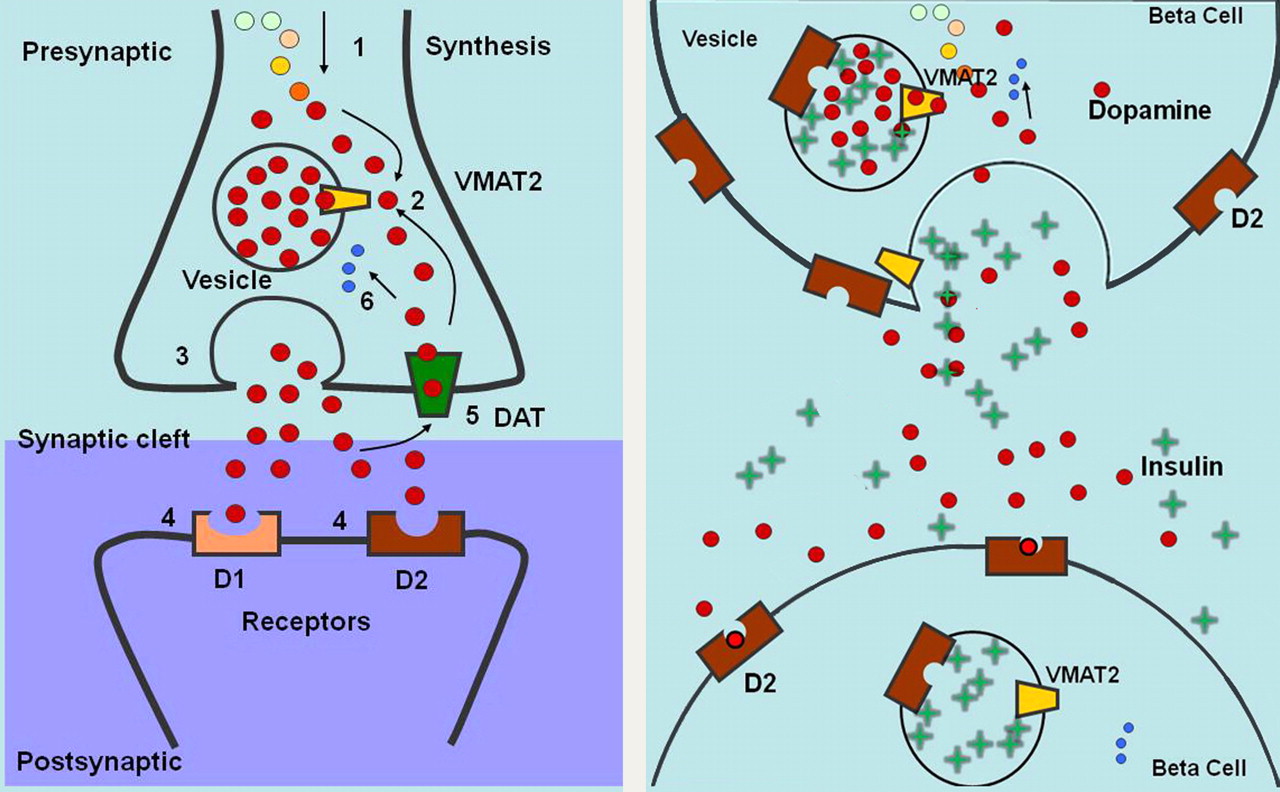
God or gods will never “die off.” Hitchens and Rubicondior are obviously aloof to the science regarding the VMAT2 gene. Hitchens was alive when the discovery of this gene was made public, yet to my knowledge he never addressed it. Moreover, Rubicondior on her blog claims to be a “biologist,” so she should be aware of this study, yet she seems ignorant of it. A search on her blog will produce no results as shown here on Sept. 22, 2012 at 4:50 PM Eastern Time.
There is a reason why religion stays away from science. Because science crushes superstition.
Study? VMAT2 stands for Vesicular Monoamine Transporter 2. It codes for a protein that is integral to membranes particularly in the brain where neuroreceptor monoamines such as serotonin, norepinephrine, dopamine and histamine from cellular cytosol to synaptic vesicles prior to release.
The idea that VMAT2 is related to “faith” is a contentious one mainly because there is absolutely no research into that. The idea of that is from a book by Dean Hamer which is pop-science and not a peer reviewed book. It is however an essential gene to survive. We can breed mice which are VMAT2 knock-outs and they tend to die a few days after birth. The lack of neurotransmitter is deadly. It’s a necessary gene for high order thought which INCLUDES being religious but also includes solving crossword puzzles, socialising and aiming a head shot from across a Team Fortress 2 map. Even Hamer (the goddamn author) disagrees with the notion that VMAT2 is a “god gene” pointing out it’s one of the factors of all faith including faith in sports teams and your girlfriend.
And EVEN if a god gene existed, it would not support the presence of ANY god. In fact it would indicate that faith is purely a delusion brought on by genetics. It’s not because we know what VMAT2 does and that lacking it will cause us to die because it is vital to normal brain function.
Sacerdotus replies:
Religion does not stay away from science at all. The Catholic Church gave birth to western science as we know it. It is clear you are not educated in the history of science. Countless pioneers in science have come from the ranks of the Catholic clergy as well as from Christianity in general. Do you understand the meaning of the word 'superstition?' It means: a belief or practice resulting from ignorance, fear of the unknown, trust in magic or chance, or a false conception of causation. Christianity is a religion that uses reason in its doctrines. The early Church used Greek philosophy in order to expound on theology. We just don't blindly believe. Ideas regarding God are studied heavily. The words 'superstition' only applies to those who believe anything such as a mirror breaking and giving off bad luck.
It is obvious you are not up to date in Biology. The VMAT2 is heavily supported by many geneticists and biologists. Hamer specifically stated that this gene predisposes us to belief in God and the supernatural. Whether this gene exists for survival is not known for sure. It is highly unlikely that this is the case. How can contemplating the supernatural assist in the survival of an organism nature? If the material world is all that exists, why do we need a gene that makes us contemplate on a spiritual world that would serve no purpose to our survival in the natural material world? The existence of the gene shows that there is something beyond the natural world. Our genes are coded to handle nature. What good would a gene that focuses on the supernatural do? It is like having a cell phone but no vocal cords to speak with and put that phone to use. If you describe the affects of the gene as delusional, then we all are living a delusion because we all have this gene. So basically according to you we are all delusional.
In reality, every thing we do is based on our genes. How we grow, how we live, act, learn etc is based on genes. That being said, it is obvious VMAT2 exists for a reason. If there was nothing supernatural, no God, then that gene would serve no function at all. The fact that it exists says a lot.
Menchen who died in 1956 was obviously unaware of this science and therefore I cannot label him as ignorant. Had he lived today, his writing would have had to be updated to reflect the knowledge we possess regarding the VMAT2.What Knowledge. We know what it does, it’s not a “god gene” any more than the gene for haemoglobin makes you believe in Dracula.
Sacerdotus replies:
We know what it does NOW, but Menchen lived at a time when the gene was not discovered. Your analogy with Dracula and hemoglobin is fallacious. Dracula is not a deity, but a predator. Why would hemoglobin produce belief in a predator? The "God gene" is unique because it shows we are wired to contemplate what is not of the physical realm.
The VMAT2 gene predisposes all human beings to belief in God and the supernatural. Contrary to the idea “we are born atheists,” this gene empirically shows that we are all indirect theists at conception, if you will.
The VMAT2 gene packs neurotransmitters into vesicles in the presynaptic cleft. And belief in something doesn’t matter. If everyone believes in something non-existent then everyone is superstitious, not the non-existent thing.
Sacerdotus replies:
You are misrepresenting the VMAT2 gene. The belief it produces does matter. This belief is linked to the supernatural. It brings about a feeling of transcendence. It is not about believing anything for no reason.
In light of this, God or gods can never be dead. ”God” is hardwired into our genome. To “kill God” is to kill us, or what makes us genetically human.In light of this amazing discovery we have found out that there is a protein gate that packs neurotransmitters into vesicles. And belief due to this is purely pathological. It’s not indicative of reality.
Sacerdotus replies:
Again you make a claim without backing it up. What evidence do you have that this gene brings about pathology? By claiming this, you are saying that all human beings are pathological. Moreover, what is reality? Reality is just perception. We never engage anything in the world. What we perceive is the coulomb repulsion. No one has ever experienced "reality." The information of what we think is reality is second hand.
No. It’s you scrambling around desperately trying to match something to your faith no matter how silly it to provide an ounce of validity.
Sacerdotus replies:
If not, then show otherwise. You have not provided any substance to your counter arguments. Your contrarian approach does not validate atheism or your position.
Moreover, the comparison of the gods of ancient peoples cannot be applied to the One God. These gods were attempts by man to put into language and practice what the VMAT2 instructions give to the human being.Clearly Sacerdotus hasn’t read any genetics or he would know what VMAT is and wouldn’t say things that are clearly wrong. This argument is one of fantastic racism. Clearly those gods were products of the VMAT2 gene (despite the VMAT 2 not doing that), while ours is real! What makes him think his god is not a figment of his imagination produced by the VMAT2 .
Sacerdotus replies:
The studies are clear and are publicly available. You are demonstrating a strawman fallacy again. Previously your wrote, "
It’s a necessary gene for high order thought which INCLUDES being religious..." Now you are contradicting yourself. First you say the gene includes being religious and now you're saying it does not. Alongside the strawman, you are demonstrating cognitive dissonance.
The Catholic Church does not devalue these attempts to define God. On the contrary, it’s system of missionary work and history of conversions often at the point of death while systematically destroying local culture has proven otherwise. In addition Sacerdotus implied that his god is real while everyone else’s is a product of biological chicanery and an organic mental disorder brought about by a fault in genetics.
Sacerdotus replies:
If it is true what you claim, then why do these other religions still exist? You have not provided evidence of this claim. I never implied what you claim. This is again a strawman. What I did state is that we all are wired to believe in God and the supernatural. This natural inclination has brought about man giving designations and definitions based on human experiences to God.
Allow me to quote from the Catechism which explains why other religions and their “gods” are “valid” to a certain extent:“843 The Catholic Church recognizes in other religions that search, among shadows and images, for the God who is unknown yet near since he gives life and breath and all things and wants all men to be saved. Thus, the Church considers all goodness and truth found in these religions as “a preparation for the Gospel and given by him who enlightens all men that they may at length have life.”332″CCC
Here’s my points
1. If he is unknown yet near then you how do you know he is unknown and near.
2. Again, if he is unknown then how do you know what he wants?
3. This is basically an admission that you don’t have ANY evidence for a god yet you INSIST that he does X, Y and Z
4. And it is pretty damn insulting to other faiths because it lives under the assumption that God’s name is Jehovah not Brahman.
Sacerdotus replies:
1. One can be unknown and near. For example: A stranger could be behind you. The stranger is unknown to you but is near you. It happens all the time. What the Catechism is stating is that God is not fully revealed to man. He is for all intent and purpose a "mystery." Yet, this mystery is still present. Sherlock Holmes would be nothing without the "mystery" aspect of his life.
2. He reveals His will to us.
3. What admission? This quote was in response to Rubicondior's misunderstanding of God and the common atheist sophistry of dividing God into 3000 persons.
4. Just consider those names "nicknames" of the same being. There is only ONE God. One group calls Him Jehovah, another Brahaman. The underlining factor is that there IS a GOD.
The One God revealed Himself to man, first to the Hebrews and now to the rest of the world through Jesus Christ. The difference between this God and the other gods is that this God is actually alive. This God actually works in the world. Those who believe do so not because of fancy theological arguments or dogmas but because they experience one way or another this God.
Really? Through Jesus? Surely an all powerful magical being would reveal himself across the globe saving countless individuals through empirical proof rather than the hearsay and gossip of a bunch of shepherds.Oh you mean the difference between Jesus and Mazda and the Greek Gods and the Hindu Gods are that Jesus is alive and works in the real world unlike the bringer of fire, the various greek heroes such as Hercules and Hindu gods such as the Avatars of Vishnu. So the Hindu euphoria of faith is false while Catholicism is true? Prove it.And you can feel the same kind of feeling standing on a terrace of a football match. It doesn’t mean that Manchester City is the holy land, it just means that you feel group euphoria.
Sacerdotus replies:
He has revealed Himself. If you read the Bible you would learn of the times He has revealed Himself. Moreover, He continues to reveal Himself daily to countless individuals who open themselves to Faith. God does not impose on anyone that is why He gave free will. If you want empirical proof from God Himself, you must ask directly. Seek and you shall find, ask and you shall receive.
The gods you mention are man's interpretation of the One god. It is not a game of different gods competing against each other. The Hindu faith is not entirely false. It has tenets that most other religions possess. All religions are a preparation for fullness of Truth found in the Catholic Church. Catholicism is true because it was founded by God Himself in Jesus Christ over 2000 years ago. This Church has passed the tests of time and has survived despite scandals from within throughout the centuries. This Church is the only Church to have manifestations of the Divine.
Whether Atheists like it or not, we are all wired to believe in God and to seek the supernatural. Perhaps this is why Atheists are so fixated on Theism. Anyone who does not care to entertain religious beliefs will not dedicate so much time and thought on them.Actually most of us have real jobs that we do. Atheism is just something we are that we call upon to reduce religious intereference in normal life.
Sacerdotus replies:
If that were true then you would accept that others believe and get over it instead of roaming about trying to censor religious belief. Religion is here to stay. The majority will not suffer the tyranny of the minority.
- Rubicondior labels herself a ‘humanist,’ yet why is her blog solely focused on God and religion?
Don’t know. Don’t care. Maybe because it’s her blog?
Sacerdotus replies:
Well my blog post was a critique of Rosa's sophistry. I do not understand why you chose to respond to it.
- Where are the blogs promoting clothing and food drives?
Do not send food or clothing to India. I swear to Mancini! Send money. Money lets us buy food and clothing. And clothing? Give new clothes. You want to help, show poor people some respect. Don’t send them your cast offs. It’s insulting.
Sacerdotus replies:
Do not send food or clothing? Are you serious? What a cruel and selfish thing to state.
- Where are the blogs promoting blood drives and bone marrow donations?
Atheists? Quite a few of us donate blood (I am a regular donor) and marrow.
Sacerdotus replies:
Where are the blogs promoting them?? Notice the writer did not answer the question.
- Where are the blogs promoting efforts that help humanity with its basic needs?
Mine does. Atheist blog encouraging charity.
Sacerdotus replies:
What charities do you promote?
Vmat2 is obviously instructing Rubicondior to ask questions – to seek God and the supernatural – otherwise she would not take so much time blogging on the topic. VMAT2 also wants me to smack my head against the desk because of all the genetics being mutilated.
Sacerdotus replies:
That is not VMAT2. I believe that is another disorder.
God is not dead. God is alive and working in everyone, even Rubicondior. God died already and came back, this is why Christianity is the largest and most influential religion ever to exist. We killed God 2,000 years ago and He came back. Even today, Philosophies have tried to kill God, but He comes back. Atheists try to kill God, but He comes back.Christianity is the largest and most influential religion on the planet because it’s filled with a***holes who destroyed culture and forced religion on others at the point of a sword or the end of a gun. It did so by destroying culture and society and pillaging nations to fund it’s growth. To attribute it’s spread to divinity is to understand that your god is a monster of rape, racism and pillage which is the foundation of the spread of christianity in the third world at the hands of armies and the parasites of priesthood.God cannot be killed in the same way that Harry Potter or Han Solo cannot be killed. Plot Armour and Fictitious beings do not die.
Sacerdotus replies:
Again, a bunch of hyperbole. Christianity is the largest and most influential religion because it works. It is of God and it is willed by Him. The Catholic Church has preserved a countless number of cultures. You make accusation after accusation with no evidence of this. Granted some believers did and do evil things in God's name; however, those acts are not promoted by the Church. It is unfair of you to judge an entire religion based on a few bad apples.
God cannot be killed because He is eternal. We all belong to God. He is the one who calls us back at death. The characters you mention can be killed because they are mortal creations. God transcends the universe and is forever.
God will not die. What will die are speculative Philosophies based on hyperbolic rhetoric. Atheism, which already has the lowest retention rate will be mourned by God and those of Faith. Yes, you are right. There will always be people who would rather believe in superstition than in reality. There are countless people on the planet who would rather believe that they are part of a special little club which has all the answers to everything rather than the reality.
We don’t know a lot of things. It’s no shame to admit your ignorance. Science doesn’t know everything. If it did, then it would stop. No. The people who claim to have ultimate knowledge are religions and religion has proven time and time again that it doesn’t have anything but the 2000 year old superstitions of people who would consider us gods. A god dies when no one is left to believe in him and he is forgotten and becomes a relic of history. In time that will occur to Jehovah. Who knows, in the future we may all think Tom Cruise is the one true messiah to save us from Xenu in the same way that 2 billion odd people believe in Jesus but it doesn’t change the fact that Tom Cruise is not a god and neither is Jesus. At best he was a real man at worst he was a fictional character.
And the highest retention rate of faith is in Hindus, maybe hinduism is more true than Catholicism. That’s the Sacerdotus logic for you…
Sacerdotus replies:
Define reality. To date, biologists cannot even define what life is! Yet you know what reality is... go figure. You must have been born with knowledge that no one else possesses. Reality is the perception of electrical signals. Are those electrical signals real or are they part of a simulation? Do we really exist or are we brains in a vat? Can you prove you are real?
Being religious does not mean we know everything. Our main goal is to believe in God while living virtuous lives. While doing this we take advantage and learn about this universe. This is why the Catholic Church gave us science and continues to promote it. You need to stop grouping Christianity into this one fundamentalist religion. Catholicism is the true Christianity founded by Christ. Other denominations are man-made and have great errors in their understanding of Scripture and God. This is where your confusion lies. You seem to think that Catholics, Protestants and Orthodox are all the same, we are not. The latter separated from the Catholic Church and have their own ideas.
I am curious to know what is your source regarding Hinduism having the highest retention rate.
Mohandas Karamchand Gandhi was very fond of Christ and Christianity.
"I don't reject Christ. I love Christ. It's just that so many of you Christians are so unlike Christ." - Ghandi
“If Christians would really live according to the teachings of Christ, as found in the Bible, all of India would be Christian today." - Ghandi

.jpg)


.jpg)


.jpg)


 September 23, 2012 at 1:27 pm
  Avicenna